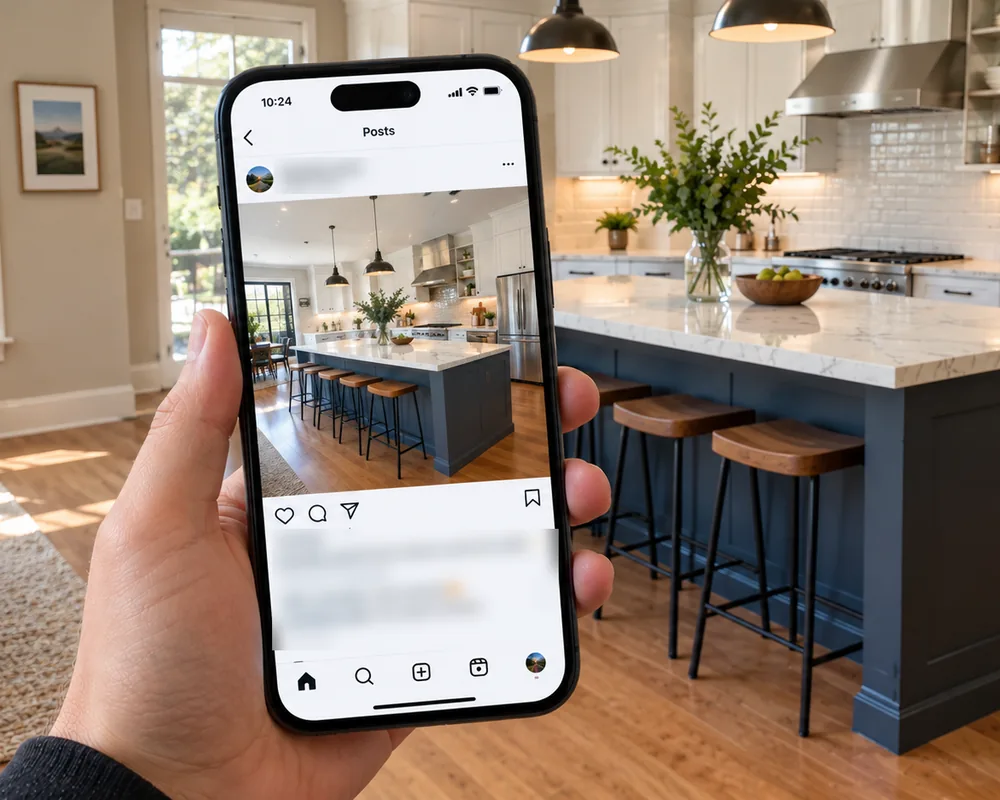
Remodeling is visual.
A before-and-after of a real kitchen or bathroom says more than any headline.
Cost per lead$42.95Facebook, Home & Home Improvement, 2026
Conversion rate5.32%Facebook, Home & Home Improvement, 2026
The short answer
LocaliQ's 2026 benchmarks put the average Facebook lead for home and home improvement at about $43. For remodelers, the price matters less than the quality: real project photos, a clear offer, a form that asks about project, timeline and budget, and fast follow-up decide whether those leads become signed jobs.
Key takeaways
Want us to find your three biggest lead leaks?
Free Growth DiagnosisThe most useful public numbers come from LocaliQ and WordStream, who publish yearly Facebook ads benchmarks for 20 industries. Their 2026 report (updated September 23, 2026) shows these averages for Home & Home Improvement lead campaigns:
So home improvement leads on Facebook cost more than the average industry, and fewer clicks turn into leads. For comparison, our guide How much should a roofing lead cost in 2026? shows about $91 per lead on Google Ads for the same Home & Home Improvement industry (WordStream / LocaliQ, Google Ads Benchmarks 2026). Facebook and Google bring different homeowners, so compare cost per signed job, not just cost per lead.
These are averages across many businesses. Your own cost depends on your area, your offer, your photos and your form.
A before-and-after of a real kitchen or bathroom says more than any headline.
Many browse ideas for a while before they ask for quotes. Facebook and Instagram reach them while they are still deciding.
A free design consultation, a showroom visit or a free estimate each attract a different kind of homeowner.
The catch: people on Facebook were not searching for you. Their leads often need more follow-up than Google leads.
New to Meta ads? Start with our guide to Facebook ads for contractors.
Facebook's default form fills in name and phone by itself. That brings many leads, but some people tap "submit" without a real plan.
A cheap-looking ad brings small repairs when you want full remodels.
A homeowner who filled a form at night may forget it by the next afternoon.
If you only count form fills, the platform finds more people who fill forms, not more people who sign.
Use your own project photos and before-and-afters, not stock photos.
For example "free kitchen design consultation" for full remodels, and a separate ad for bathrooms.
Project type, when they want to start, budget range, and whether they own the home. As Facebook ads expert Jon Loomer puts it: "If you want better (but fewer) leads, ask more questions."
Meta's default is "More volume". "Higher intent" adds a confirmation step before the homeowner submits, which can help quality.
When your CRM sends back which leads became consultations or signed jobs (Meta calls this conversion leads optimization), Meta can look for more people like them. It can mean fewer leads and needs a higher budget, with the aim of better ones.
An instant automatic reply (text only with consent) and a follow-up plan in your CRM keep good leads warm while they decide.
Illustration, no real data. Your results depend on your offer, questions and follow-up.
Meta has "special ad categories" with stricter targeting. Meta's own Special Ad Categories help page lists "housing repairs" as an example of the Housing category, along with things like home sales and rentals, mortgages and home insurance. If your ads fall into it, Meta limits your targeting, for example:
Meta's rules can change, and ads that should have been marked may be rejected. If you are not sure whether your ads count, check Meta's own Special Ad Categories help page before you launch. With wider targeting, your photos, words and form questions do more of the work of finding the right homeowners.
Look past cost per lead. The number that pays the bills is cost per signed job:
Cost per signed job = ad spend in a period ÷ jobs signed from those ads in the same period.
For example, a $30 lead that never signs is more expensive than an $80 lead that often does. To see this, every lead needs to be tracked from the ad to the CRM, and your team marks which ones signed. Read more in What is cost per signed job?
Five questions that help a remodeling lead form bring high-quality leads.
Check your form: does it ask about project, timeline and budget? If not, add two or three questions.
Check your first reply: do new leads hear from you within minutes? If not, look at instant lead replies.
Check your tracking: can you see which ad brought each signed job? If not, start with tracking.
See how we run Facebook and Instagram ads and marketing for remodelers: ads, landing pages, tracking, replies, CRM and weekly reports, with your team in charge of the calls and sales.
They can. Many homeowners browse remodeling ideas on Facebook and Instagram before they call anyone. The ads work best with real project photos, a clear offer, a few qualifying questions on the form and fast follow-up.
LocaliQ's 2026 benchmarks show about $43 per lead for home and home improvement lead campaigns. Your price depends on your market, offer and form. A cheaper lead is only better if your team signs more jobs from it.
Both can work. Lead forms are quick for homeowners, so they bring more leads but often lower quality. A landing page or a higher-intent form with a few questions brings fewer leads that are more ready to talk. Test both and compare cost per signed job.
Written by the Digital Hark team. We run ads, landing pages, tracking and follow-up systems for US roofers and remodelers. Every number in this guide comes from the public sources below; the examples are labeled.
Book a free Growth Diagnosis. We review your ads, website and follow-up, and send you a short written summary of the top leaks and what to fix first.
We reply within 24 hours
We use cookies and similar tools to measure and improve this site and our ads. Privacy