
Guide · Leads
Missed-call text-back for contractors: how it works and what to text
You can't pick up on a roof, in a client's kitchen or under a storm-damaged oak. Missed-call text-back sends the caller a short text (texts only with consent) so they don't move on to the next company. Here is how it works for roofers, remodelers and tree services, five texts you can adapt, the callback routine that makes it work, and how to measure it with your own numbers.
The short answer
Missed-call text-back is an automatic text your business number sends seconds after a call your team could not answer (texts only with consent). It says who you are, asks one question about the job and says when you will call back. The caller can reply with details. It is a safety net: a person still calls back.
Key takeaways
- Text-back (texts only with consent) is a safety net for calls you can't take, not a replacement for answering the phone.
- The first text (texts only with consent) does four things: who you are, sorry we missed you, one question about the job, when you will call back. Plus "Reply STOP to opt out". No prices, offers or links.
- The text is only the start. A person on your team calls back, and the reply waits in your CRM as a callback task.
- Set it up so it doesn't misfire: landlines, repeat callers, customers and suppliers, STOP replies. Register your business texting number with your provider before you switch it on.
- Count your own numbers for two weeks. Vendor "recovery rates" are not your numbers.
Want us to find your three biggest lead leaks?
Free Growth DiagnosisWhat is missed-call text-back?
It is an automatic text from your business phone number to a caller your team could not answer (texts only with consent). The call rings out, and a few seconds later the caller gets a short message: this is your company, sorry we missed you, what is the job, we will call you back.
What it is not:
- Not an answering service. Nobody talks to the caller. The text buys you time; it does not do the job of a call.
- Not a sales message. It is a reply to someone who just called you, so it stays short and about their job.
- Not the end of the lead. Your team still calls back, and someone who doesn't reply to the text still gets a call.
Why do missed calls cost contractors jobs?
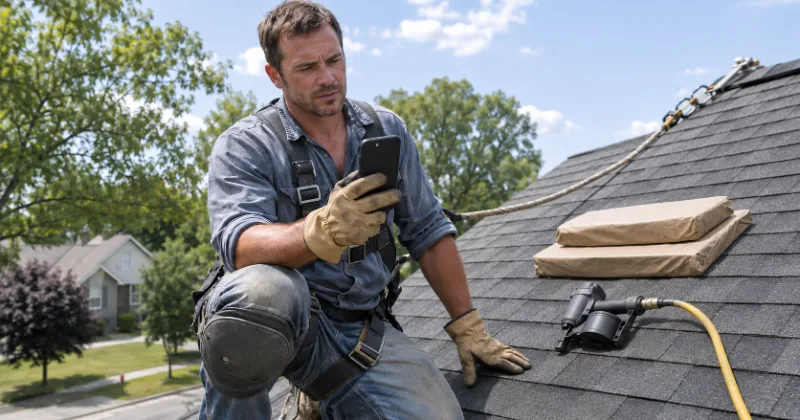
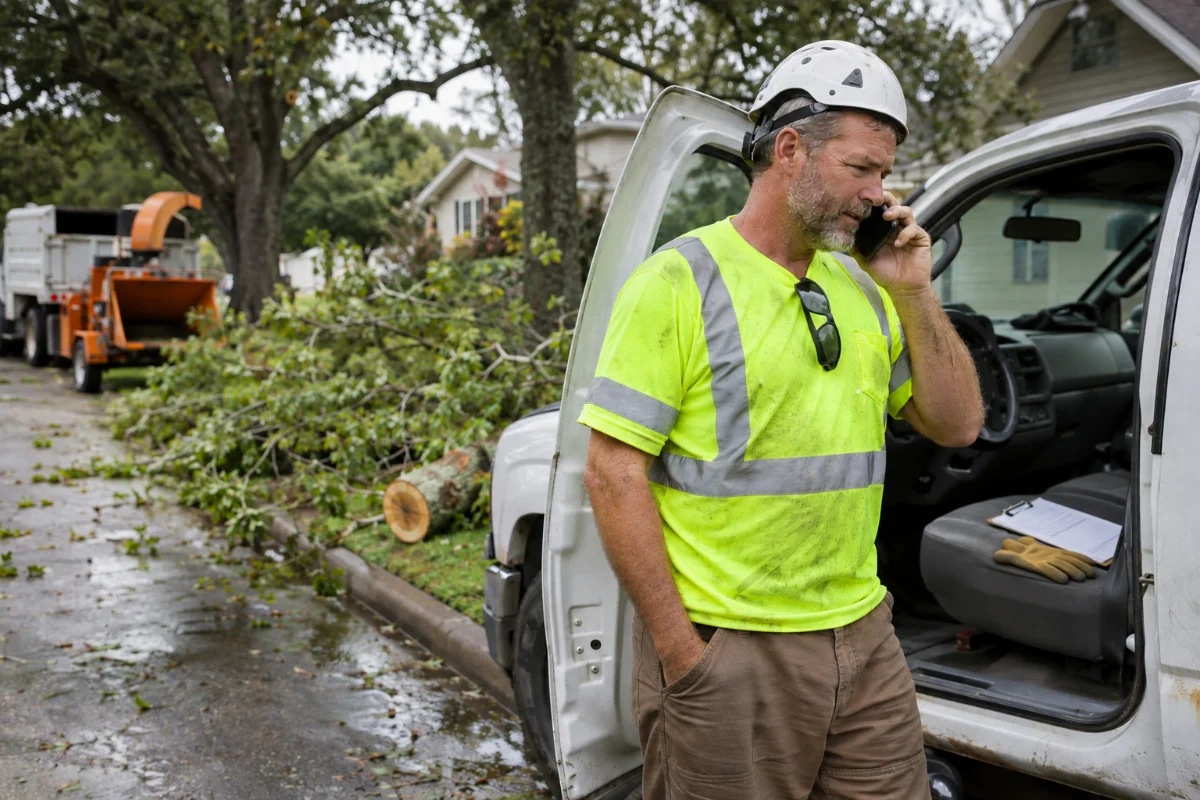
Because a contractor's busiest hours are the hours they can't pick up. A roofer is on a pitch with both hands busy. A remodeler is walking a client through a kitchen. A tree crew is running a saw after a storm, when the phone rings the most.
And most callers don't leave a message. In a 2026 survey of 1,000 US adults who had called a local service business in the last 30 days, run by SmartCallService (a company that sells phone services), only 9% said they "usually" or "always" leave a voicemail when a business doesn't answer.
So the voicemail box is not a safety net. A homeowner with a leak or a tree on the fence usually has a few companies on the list and keeps dialing. A short text (texts only with consent) tells them a real company got the call and will call back. How fast to reply to every kind of lead, not just calls, is in our guide to speed to lead for roofers and remodelers.
How does missed-call text-back work for a contractor?
Four steps:
- The call rings out. Nobody on your team can pick up, or you decline it because you are on a ladder.
- A text goes out from your business number (texts only with consent). It is the same number the caller dialed, so they know who it is.
- The reply lands in your CRM with the caller's number, what they wrote and a callback task with an owner.
- Someone calls back, already knowing the job. "Hi, it's {Rep} from {Company}. You texted about the leak over the garage."
Three common ways to set it up (we don't recommend a brand here; check what your own tools can do):
| Route | What it means | Good to know |
|---|---|---|
| Your business phone system | Some business phone services have a missed-call text feature you switch on. | Easiest if it exists. Check whether it can skip numbers, stop after one text and log replies. |
| A text-back app | A separate app or service that watches your business line and sends the text. | Check that it uses your business number, not a new one, and how replies reach your team. |
| Your CRM | A CRM with phone and texting can send the text and create the callback task in one place. | Best for follow-up, because the reply, the task and the job notes sit together. |
Whatever you use, check four things before you pick: it texts from your business number, it can skip numbers you choose, it sends one text per caller in a set time, and every reply reaches a person fast. A personal phone's "reply with a message" button is a manual tap, not an automatic text; check with your phone provider what your line can do. Call tracking shows how many calls you miss in the first place; see call tracking.
What should the text say?
Short, plain and about their job. Five parts:
- Who you are: your company name, so it doesn't look like spam.
- Sorry we missed you: one short line.
- One question about the job: easy to answer with a few words. "Is it a leak or storm damage?" works better than "How can we help?" because people can answer it from the driveway.
- When you will call back: say what your team can really do, like "today" or "after 3 pm".
- "Reply STOP to opt out." In every text.
Leave out prices, offers, coupons and links. Common advice from texting software companies is that the first reply should ask a question about the job and skip prices, promotions and links.
Text templates to adapt
All texts go only to callers who agreed to get texts (texts only with consent). Swap the parts in {brackets} and keep each one short.
1. Roofer on a roof
Hi, this is {Rep} from {Company}. Sorry we missed your call, the crew is up on a roof right now. Is it a leak, storm damage or a new roof? Reply here and {Rep} will call you back today. Reply STOP to opt out.
2. Remodeler on site with a client
Hi, it's {Company}. Sorry we missed you, {Rep} is with a client on site. Which room are you thinking about: kitchen, bathroom or something else? We'll call you back after {time}. Reply STOP to opt out.
3. Tree service, storm day (emergency-aware)
Hi, this is {Company}. We're getting a lot of calls after the storm and we will call you back. If a power line is down, stay away from it and call your power company or 911 first. Is a tree on your house, on a car, or down in the yard? Reply STOP to opt out.
Never promise a time on a storm day. Put safety first and ask the one question that tells your team who to call back first.
4. After hours
Hi, this is {Company}. Our office is closed for the day. What's the job you need help with? {Rep} will call you back in the morning. If water is coming in right now, reply "urgent". Reply STOP to opt out.
Only offer "urgent" if someone on your team really watches for it after hours. If nobody does, leave that line out.
5. Busy season (after a storm or in peak months)
Hi, this is {Company}. Sorry we missed you, it's our busy season and we're calling everyone back in order. What's the job you need help with? We'll call you back as soon as we can. Reply STOP to opt out.
Record a voicemail greeting that says the same thing as the text ("We'll text you in a moment and call you back today"), so the caller hears and reads one message.
What happens after the text goes out?
The text is the start, not the job. Text-back only works if a person calls back. A simple routine:
- One owner per day. One person (you, your office manager or a crew lead) owns missed-call callbacks for that day. Write the name on the schedule.
- A callback window. Decide how fast your team calls back: within the hour on a work day is a good goal for most crews. Breaks, lunch and the end of each job are natural moments to check.
- Every reply becomes a CRM task. The reply, the caller's number and the callback task sit together, so nobody has to scroll a phone.
- No reply still gets a call. Someone who doesn't answer the text may not text at all. Call them anyway.
- Use what they wrote. Open with it: "You mentioned a tree on the fence on Oak Street."
- Write down the result. Reached, visit set, not a fit, no answer. That gives you the numbers for the table further down.
After that first call, your normal follow-up plan takes over, with call, text and voicemail scripts for the first two weeks.
When does text-back go wrong?
Most problems come from a setup that texts everyone, every time. Check these:
- Landline callers. A text to a landline doesn't arrive. Your callback list should include every missed call, not only the ones who reply.
- Repeat callers. A homeowner who calls three times in ten minutes should get one text, not three. Set a cooldown so each number gets one text in a set time, like a day. Vendors that sell these tools commonly offer this setting.
- People who aren't leads. Existing customers, suppliers, subcontractors, your own crew and known spam numbers. Put them on a skip list so they don't get a "What's the job?" text.
- Calls you declined on purpose. If you decline a call because you are on the roof, the text is fine. If you declined because it is a spam number, the skip list should catch it.
- STOP replies. When someone replies STOP (or "stop texting me"), that number gets no more texts from any of your tools, not just this one. Check that your CRM and text-back tool share the opt-out.
- Emergencies. A text can't help a homeowner whose ceiling is coming down. Your storm-day and after-hours texts should point to safety first, and your team should call real emergencies back first.
- The wrong tone at the wrong time. "The crew is on a roof" at 10 pm reads oddly. Use a separate after-hours text.
What should you check before you switch it on?
Four quick checks with your texting provider (this is general information, not legal advice):
- Register your business texting number. US carriers expect business texts from a normal 10-digit number to be registered (A2P 10DLC), usually with your legal business name and EIN. Industry guidance warns that unregistered texts can be filtered by carriers without any error you can see.
- One reply is not a marketing list. Industry guidance treats a reply to someone who just contacted you as the lower-risk case, for a short time. Follow-up marketing texts need separate consent. Don't add text-back numbers to a promotions list.
- STOP in every text, and honor it across every tool you use.
- Mind the hours. Keep automatic texts short and about the caller's job, and send them in normal hours where you can.
The full list of texting rules to check, with dates, is in our guide's section What texting rules should you check first?
How do you know if it is working?
Count your own numbers for two weeks. There is no reliable public benchmark for text-back reply or "recovery" rates; even a vendor that sells it says it found no study that measures them. So your own numbers are the benchmark.
Copy this table and fill it in every Friday:
| Missed calls | Texts sent | Replies | Callbacks made | Visits set | Signed jobs | |
|---|---|---|---|---|---|---|
| Week 1 | ||||||
| Week 2 |
Worked numbers in this guide show the method; they are not real client results. Say a roofer misses 40 calls in two weeks. 34 texts go out (6 numbers were on the skip list or got a cooldown). 12 people reply. The team calls back all 40. They set 9 inspections, and 3 become signed jobs over the next weeks. The questions to ask:
- Missed calls vs texts sent: is the skip list and cooldown working, or are customers and suppliers getting texts?
- Replies vs callbacks: does every reply and every missed call get a callback? If callbacks are lower than missed calls, the routine is the problem, not the text.
- Visits and signed jobs: do the calls you nearly lost turn into work? Track them in your CRM by source. Our guide to cost per signed job shows how.
Change one thing at a time (the question in the text, the callback window, the owner) and compare the next two weeks.
Missed-call text-back vs answering every call vs an answering service
A neutral look. Most contractors use more than one.
| Missed-call text-back | Answering every call yourself | A live answering service | |
|---|---|---|---|
| What it does | Sends one automatic text when a call is missed (texts only with consent); your team calls back | You or your office pick up every call | Trained people answer when you can't and take a message |
| Who talks to the caller first | Nobody; the caller reads a text | You or your office | The service's staff |
| Fits best | Small crews on job sites, owners who run the jobs | Businesses with office staff during work hours | Businesses with a lot of calls or after-hours work |
| Watch out for | Landlines, no-reply callers, slow callbacks | Calls during jobs, lunch and evenings | Script quality and how messages reach your team |
| Still needs a callback? | Yes | No, if answered | Yes, in most setups |
Whichever you pick, the job is won on the callback: someone who knows roofs, kitchens or trees calls the homeowner back fast.
Who does what?
The system sends the text (texts only with consent), logs the reply, creates the callback task and keeps the numbers. Your team calls back, asks the questions, sets the visit and signs the job.
Missed-call text-back is one part of the growth system Digital Hark builds for contractors: ads in your own accounts, landing pages, tracking, a fast first reply and a CRM with a follow-up plan. See roofing marketing, remodeling marketing and tree service marketing, and how text-back fits into speed to lead. We never answer your phone, call your leads, book visits or sell jobs for you; your team does that. You own every account and every lead.
Common questions
Is it legal to text someone who called my business?+
A short automatic text (texts only with consent) as a reply to someone who just called you is the lower-risk case under common industry guidance, but rules and carrier policies change. Register your texting number, keep the text about their job, include "Reply STOP to opt out" and don't add them to marketing texts without separate consent. This is not legal advice; ask your texting provider.
Does missed-call text-back use my business number?+
It should (texts only with consent). The text should come from the same business number the homeowner called, so they know who it is and can reply or call back. Check this before you choose a phone system, app or CRM, and register that number for business texting.
What if the caller is on a landline?+
The text won't arrive. That's why every missed call, not just the ones who reply, goes on your callback list. Your voicemail greeting should also say you will call back.
What should the text say after hours or during a storm?+
After hours: say the office is closed, ask what the job is and say when you will call back. On a storm day: put safety first (stay away from downed power lines, call the power company or 911), ask one question about the damage, and don't promise a time.
Can missed-call text-back book appointments by itself?+
Not on its own. A basic text-back sends one text and logs the reply. A person on your team should call back, ask the questions and set the visit. Keep a person in the loop.
Missed-call text-back or an answering service: which is better?+
It depends on your calls. Text-back fits small crews on job sites who can call back within the hour. An answering service fits busy offices or after-hours work where callers need a voice. Many contractors use text-back as the safety net either way.
Kausar Ahmed, Founder, Digital Hark. Digital Hark runs ads, landing pages, tracking and follow-up systems for home-service contractors. Contractors' own teams answer and return the calls and sell the jobs. Nothing here is legal advice. Sources checked November 4, 2026, except where a date is given. About Digital Hark
Sources
- SmartCallService, "2026 Small Business Phone Report" (online survey of 1,000 US adults who had called a local service business in the last 30 days, March 2026, ±3.1%; 9% usually or always leave a voicemail), May 5, 2026, read November 4, 2026 (survey by a company that sells phone services)
- CallRail, "A2P 10DLC Changes" (business texts are A2P; automated replies to a missed call need the legal business name and EIN; a reply is allowed for a reasonable response period after someone contacts you first, follow-up promotional texts are not), callrail.com, December 21, 2021, read November 4, 2026 (provider and industry guidance, not law)
- ZyraTalk, "Missed Call Text-Back: How It Works and Its Limits" (unregistered 10DLC texts are filtered without a visible bounce; registration needs legal name, EIN and a use case; don't add text-back numbers to a marketing list without separate consent), zyratalk.com, August 4, 2026, updated October 23, 2026, read November 4, 2026 (vendor guidance, not a study)
- Vendasta, "How Missed Call Text Back Works and Why Local Businesses Use It" (cooldown / repeat-caller controls; "No study we found measures missed call text-back response rates"), vendasta.com, October 19, 2026, read November 4, 2026 (vendor guidance)
- Aloware, "Missed Call Text Back: How Auto-Texting Every Missed Call Recovers Lost Deals" (first text asks a question about the job; skip pricing, promotions and links in the first text), aloware.com, July 29, 2026, read November 4, 2026 (vendor advice, not a study)


