
Guide · Remodeling
Deck builder marketing: how remodelers get more deck, covered patio and pergola jobs
How to market decks, covered patios and pergolas as three services: their own ads, pages and build photos, a clear answer to the permit question from the city's own rules, real-photo Meta ads within the Housing rules, an old-deck campaign, and cost per signed job for each.
The short answer
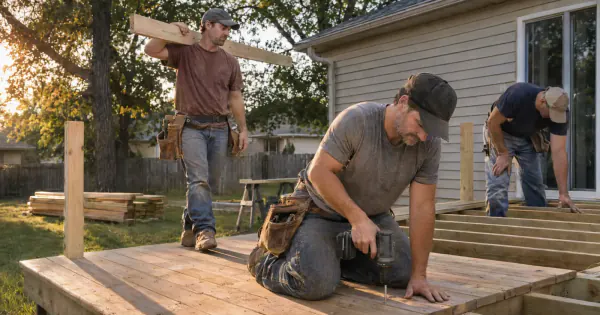
Decks, covered patios and pergolas are three jobs. Deck buyers ask about material and permits, a covered patio is a bigger job with more trades, and a pergola is chosen mostly for looks and shade. Answer the permit question from your city's rules, name the wood, composite or PVC you build with, and turn old decks into new jobs.
Key takeaways
- Show the build, not only the finish: footings, framing, the inspection, then the finished deck from several angles.
- Permits sell. In San Antonio and Austin, a deck skips the building permit only if it is small, low, freestanding and not the way out of the house. Say how you handle permits and inspections.
- Meta ads work for photo-led jobs; check Meta's Housing rules first.
- Old decks are a lead source: NADRA runs "May is Deck Safety Month®", and Houzz found broken or worn outdoor elements are a top reason to renovate.
- Count consults, proposals and signed jobs per job type. No study we found names the month homeowners plan a deck; your own lead dates do.
Want us to find your three biggest lead leaks?
Free Growth DiagnosisWhy do permits, materials and the weather set deck jobs apart from remodels?
Because the homeowner who wants a new deck is not shopping for "a remodel". They search for a deck, a patio cover or a pergola, they want to see ones like it, and they have their own questions: Will it need a permit? Wood or composite? How long will the build take?
Even when decks are one service line among several, four things set them apart:
- Their own searches. Someone who types a deck or pergola search wants a page about that, not your home page or your kitchen gallery.
- A photo-led decision. Homeowners want to see a deck or a covered patio that looks like the one they picture, on a house like theirs.
- A weather-bound build. Outdoor work depends on the weather. Even the decking maker Trex writes in its annual report that "Seasonal, erratic or prolonged adverse weather conditions may reduce the level of home improvement…"
- Their own numbers. If decks are mixed in with every other project, you cannot see what a signed deck job costs you.
This guide covers decks, covered patios (roofed structures) and pergolas built by remodelers and deck builders. Stone and paver patios and hardscapes are a landscaping job: see our page on marketing for landscape design and installation companies.
Decks, covered patios and pergolas: what changes for each?
They look close on a mood board, but they are three jobs with different buyers, questions and crews.
- Decks. A raised or ground-level platform, in wood, composite or PVC. The first questions are size, height, material, stairs and railings, and whether it needs a permit. In San Antonio and Austin, an attached or raised deck does (see the permit section below).
- Covered patios and patio covers. A roofed structure, often tied into the house. It is a bigger, different job: more design, more trades, more questions about the roof line. San Antonio's permit page shows why: "if you are building a deck with a ceiling fan and sink, you will need the following permits: building, electrical, and plumbing."
- Pergolas. An open shade structure, chosen mostly for looks and shade. The talk is about style, size, posts and where the sun falls.
Houzz's 2026 outdoor study shows decks and shade structures are common upgrades: decks "remain the most common outdoor structure upgrade at 43%", and the share for shade structures rose "15 percentage points to 35%". The survey went to 1,191 U.S. Houzz users between April 25 and May 6, 2026. It also found "71% of homeowners enlisting professional help, up from 65% in 2024."
So give each job type its own ad group, its own landing page and its own photos. Different searches mean different words on the page and a different first question at the call.
How should a deck page show the build, not only the finished deck?
One page per job type, built for the person who searched for it.
- A clear first screen: "Deck builder in {city and nearby towns}" (or covered patios, or pergolas), the materials you build with, one strong photo of your own build, and one next step (a short form or a call button).
- A gallery by job type and material: wood decks, composite decks, raised decks, covered patios, pergolas. Use the types you really build.
- Several angles of each finished build: from the yard, from the back door, from the steps, at dusk with the lights on if it has them.
- Before and after from the same spot. Stand in the same place for both photos. An old, worn deck next to the new one tells the story without a word.
- Build-step photos: footings, framing, the ledger and flashing, the inspection, the boards going down. They answer "will they do it right?"
- A short note per project: the material, the rough size, the town, and the problem you solved ("the old deck had soft boards and no safe stairs").
- A permits and inspections block (next section) and a short FAQ.
- Homeowner permission for every photo, and no house numbers or street signs in the shot.
We build these as landing pages for each service, and we can make ad videos and images from your own build photos.
Do you need a permit for a deck, patio cover or pergola?
Often yes, and saying how you handle it is a selling point. Many homeowners do not know the rules. The builder who explains them plainly looks like the safe choice. Here is what two Texas cities say on their own pages.
San Antonio. The city's Development Services page answers "Do I need a permit to build a deck?": "If your proposed residential deck meets all four of the criteria listed below, you are not required to obtain a building permit". The four: "The deck does not exceed 200 sq. ft. in area." "The deck is not more than 30 inches above grade at any point." "The deck is not attached to a dwelling." "The deck does not serve the exit door of the dwelling." The city's residential permits page lists "Decks, Carports, Patio Covers, Porch Covers" together with room additions and accessory structures, and says: "Typically a building permit is required if you decide to build, remodel, repair or demolish a structure on your property."
San Antonio also says a residential general contractor must be registered as a Home Improvement Contractor (non-structural) or a Residential Home Builder (structural), and that it adopted "the 2018 International Code Council (ICC) building-related, fire and property maintenance codes".
Austin. The city's "Work Exempt from Building Permits" page (residential, item 10) exempts a deck only if it is "no more than 200 square feet (18.58 m2 ) in area", "is no more than 30 inches (762 mm) above grade at any point", "is not attached to a dwelling or townhouse", "does not provide egress from the dwelling" and "is not located within a flood hazard area". The same page also exempts "A non-structural exterior deck repair that is limited to the existing deck boards" (guardrails and handrails are not part of that). Austin also has a separate application for uncovered decks.
What the two cities agree on: a deck skips the building permit only if it is small, low, freestanding and not the way out of the house (Austin adds: not in a flood hazard area). Attached and raised decks need one, and patio covers are on San Antonio's permit list. Other cities and counties differ. Your city decides, and so does your inspector.
How to turn it into marketing:
- Add a "Permits and inspections" block to each page: who pulls the permit, which inspections the city asks for, and how long that step usually takes for you. Write "we pull the permit and schedule the inspections" only if your company does.
- Put "Do I need a permit for my deck?" in your FAQ, and link to your own city's page instead of copying its rules.
- Show an inspection photo in the gallery (no inspector's face without permission).
- If you are registered or licensed where your city requires it, say so on the page.
This is general information, not legal or building-code advice. Check your city's current rules before you publish them.
What changes in Google Ads for deck, covered patio and pergola searches?
Most of the set-up is the same as for any remodel; change only what decks, covered patios and pergolas need. The general set-up (campaigns, match types, search terms, Google Ads or Local Services Ads) is in our guide to Google Ads for remodelers, in the sections "How should a remodeler set up Google Ads campaigns?" and "Should remodelers use Google Ads or Local Services Ads?".
What changes for decks, covered patios and pergolas:
- One ad group (or campaign) per job type. Decks, covered patios and pergolas each get their own ads, their own landing page and their own numbers.
- Job-type search themes. For example, searches like "deck builder {city}", "covered patio contractor" or "pergola builder". Check the real search volume in your own Keyword Planner for your area before you plan around any search; we state no volumes here.
- Negatives for the work you do not do. Block do-it-yourself searches (DIY, plans, kits, how to), staining-only searches if you do not stain, and repair if you only build new (or the reverse). Only block what you really do not do.
- Check your other campaigns' negatives. Kitchen and bath campaigns often block "deck" (our negative keyword guide suggests it for kitchen remodelers). If you build decks, take "deck" off your negatives only for the deck campaign, and give decks their own. The method is in our negative keyword guide for roofers and remodelers.
- Count signed jobs, not form fills. Send signed deck, covered patio and pergola jobs back to Google Ads as offline conversions, so the account learns which searches turn into contracts. We set that up as part of call and lead tracking.
Can deck photos in a Facebook or Instagram feed start a backyard project?
They can, because decks and pergolas are photo-led projects: a finished deck in a homeowner's feed can get them picturing their own backyard before they ever search.
- Use real build photos and short walk-around videos of your own decks, covered patios and pergolas: the yard before, the frame, the finished build at dusk.
- Show the before and after from the same spot.
- Remarket to people who looked at your gallery with the next step, a short form or "see more decks we built". Our retargeting guide covers how.
- Ask good form questions: deck, covered patio or pergola; new build or replacing an old deck; the rough size; and when they hope to start.
Before you launch, check Meta's rules: Meta's Housing category names housing repairs, and it limits targeting. See which Meta ad rules remodelers should check first.
How should you talk about wood, composite and PVC?
Use the homeowner's words. People search for "composite deck", "wood deck" or a brand name they saw at a friend's house, so name the materials you build with on your pages and in your ads, in plain words.
- Show a gallery section per material, with your own photos.
- When you state what a material does, quote the maker, name the page and give the date. Do not write your own lifespan, upkeep or warranty-year figures.
- Do not rank brands on your page. Name the ones you install.
Composite makers run contractor programs with listings and homeowner lead tools. Before you count on them for leads, judge them like any shared lead source.
Can old decks bring you new jobs?
Yes. Worn and broken outdoor elements start many projects. Houzz's 2026 outdoor study found that "deteriorated or broken outdoor elements as a renovation trigger has remained steady at 41%". NADRA estimates that "30 million decks are past their useful life and need to be replaced or repaired".
NADRA, the North American Deck and Railing Association, runs a deck safety campaign: "Check Your Deck® – May is Deck Safety Month®." It also has a 10-point consumer checklist; its 2023 release names "corroding fasteners, decaying materials, loose railings, inadequate lighting, and more", and says: "Although not a substitute for a professional deck inspection, the checklist is a helpful tool to assist homeowners."
How to use it:
- A May "check your deck" post on your Google Business Profile and social pages, with a link to NADRA's checklist.
- An email to past customers and to homeowners who asked about a deck before: link the checklist and offer a deck safety check (texts only with consent).
- Frame the visit as a safety check, not a sales visit. NADRA writes: "We recommend ASHI-certified home inspectors or a knowledgeable deck builder for inspections of older decks." If you are a NADRA member, you can add: "NADRA member deck builders are required to adhere to a code of ethics and comply with state licensing and insurance requirements."
- No inspection schedule of your own. Do not tell homeowners how often to inspect; point them to NADRA's checklist.
Does a maker's "prime deck-building season" tell you when to market decks?
No dated study we found names the month homeowners start to plan a deck, covered patio or pergola. The Houzz study pages give no month or season for planning. Our remodeler marketing calendar reached the same answer for remodels in general.
What we do know: outdoor building is weather-bound. Trex, a decking maker, writes that its distributors build up stock ahead of the "prime deck-building season", that "Our operating results have historically varied from quarter to quarter.", and that "Our products are generally purchased shortly before installation and used in outdoor environments." That is a maker's sales pattern, not proof of when homeowners plan or call.
So use your own data. Pull the date of every deck, covered patio and pergola inquiry and every signed job from the last two years. Find the months your inquiries come in and the months your builds start, then plan your ads, photos and old-deck emails a few months ahead of the start dates.
How do you see what each deck, covered patio and pergola job really costs?
Make decks, covered patios and pergolas three project types in your CRM, and give every lead a source. Then track, per job type:
- Inquiries by source (Google Ads, Meta, your pages, referrals, shared sites);
- Consults held;
- Proposals sent;
- Signed jobs;
- Cost per signed job: what you spent on a source ÷ the jobs of that type you signed from it.
Worked numbers in this guide show the method; they are not real client results. For example: over a quarter, the deck ad group brings 50 inquiries, 20 consults, 10 proposals and 4 signed decks. The pergola ad group brings 30 inquiries, 8 consults, 4 proposals and 1 signed pergola. The covered patio ad group brings 15 inquiries, 9 consults, 6 proposals and 3 signed covered patios. The covered patio group has the fewest inquiries but signs the most per inquiry, which you would never see if all three were one "outdoor" line. Divide each group's spend by its signed jobs to see what each job type really costs.
Our guide to cost per signed job shows how to set it up by lead source, and the cost-per-signed-remodel calculator on our marketing for remodelers page lets you try your own numbers.
Where Digital Hark fits
Digital Hark builds the growth system for remodelers: Google and Meta ads in your own accounts, landing pages, tracking of calls, forms and signed jobs, and a fast first reply and follow-up list (texts only with consent). For an outdoor line, that means separate ad groups, pages and numbers for decks, covered patios and pergolas. Your team calls the homeowners, runs the consults and sells the jobs; we never call your leads or sell for you. You own every ad account, page and lead.
Common questions
How do deck builders get more leads?+
Answer the questions deck buyers ask first: will it need a permit, and wood or composite? Give decks, covered patios and pergolas each a page with build photos from the footings to the finished deck, a permits and inspections block and its own ad group. Turn old decks into new jobs, and count signed jobs per job type.
Wood, composite or PVC: how should a deck builder talk about materials?+
In the homeowner's words. People search for "composite deck", "wood deck" or a brand name they saw at a friend's house, so name the materials you build with on your pages and in your ads, with a gallery section per material. When you state what a material does, quote the maker, name the page and give the date, and do not write your own lifespan, upkeep or warranty-year figures.
Do you need a permit to build a deck in Texas?+
It depends on the city. San Antonio and Austin both say a deck skips the building permit only if it is no more than 200 square feet, no more than 30 inches above grade, not attached to the house and not the way out of it; Austin adds that it is not in a flood hazard area. Check your own city's rules. This is not legal or code advice.
How can a deck builder turn old decks into new jobs?+
Worn and broken outdoor elements start many projects, and NADRA estimates that "30 million decks are past their useful life and need to be replaced or repaired". Use NADRA's "May is Deck Safety Month®": a May "check your deck" post on your Google Business Profile, an email to past customers with NADRA's checklist (texts only with consent), and a deck safety check, not a sales visit.
Do Facebook ads work for deck builders?+
They can, because decks and pergolas are photo-led projects. Use real photos and walk-around videos of your own builds, and remarket to people who saw your gallery. Check Meta's Housing category first: it covers housing repairs and limits targeting.
Are composite maker programs worth it for leads?+
Treat their listings and lead tools like any shared lead source. Count how many of their leads turn into consults and signed jobs, and compare that with your own ads before you rely on them. Name the brands you install on your pages, without ranking them.


