
Guide · Leads
How to qualify roofing leads before you drive to the inspection
A first-call plan for roofing companies: the questions to ask in order and why each one matters, how to sort every lead into ready, later or not a fit, a six-line fit sheet, and how to check by lead source whether your qualifying brings signed roofs.
The short answer
Qualify a roofing lead on the first call, before you book the inspection. Ask what happened, whether they own the home, whether insurance is involved, how old the roof is, who decides and who will be there, and when they want it done. Then sort the lead: ready, later or not a fit, and check the result by signed jobs.
Key takeaways
- Your team qualifies on the first call. The form gives a first sort; the call confirms it.
- Ask the same eight questions in the same order, starting with what happened and whether water is coming in now.
- Ask only where an insurance claim stands. Coverage questions go to the homeowner's own insurance agent.
- A "later" lead is a good roof on a longer timeline. Give it planned check-ins.
- Judge your qualifying by signed jobs per lead source, not by lead count.
Want us to find your three biggest lead leaks?
Free Growth DiagnosisHow do you qualify a roofing lead?
You find out, before anyone climbs a ladder, whether this roof is a job you can win and whether the homeowner is ready to move. In practice that happens in four steps:
- Your lead form gives the first sort. A few questions on your lead form already tell you what the homeowner needs, what happened, the address, whether they own the home, whether a claim is filed and when they want the work done. Our guide to the roofing lead form on Facebook shows those questions.
- Your team confirms it on the first call. The owner, office manager or estimator calls back fast and goes through the eight questions below.
- Every lead lands in one of three groups: ready, later or not a fit, each with a clear next step.
- You check the result by lead source, every month, with signed jobs as the final number.
Four steps
- 1Your lead form gives the first sort
- 2Your team confirms it on the first call
- 3Every lead lands in one of three groups
- 4You check the result by lead source
This guide stops when the inspection is on the calendar. What happens on the roof and after the estimate is in our roofing estimate follow-up guide. Remodeler? We wrote the same method for your trade: how to qualify remodeling leads. Tree service? See our guide to qualifying tree service leads on the first call.
What makes a roofing lead "qualified"?
Six checks. Each one is about the roof, the property or the timing. None is about who the homeowner is.
| Check | What you want to know | Why it matters |
|---|---|---|
| 1. The problem | Leak, storm damage, an old roof, a sale or a purchase? | Tells you the kind of visit and how fast it must happen. |
| 2. The property | Inside your service area? A roof type and height you work on? | A great lead on a roof you don't do is still not your job. |
| 3. Owner or renter | Do they own the home? If not, who does? | Only the owner can sign. |
| 4. Insurance or retail | Paying themselves, or a claim? Where does the claim stand? | Sets the pace and who else is involved. |
| 5. Roof age and last work | How old is the roof? Any repairs or a past claim? | Shapes what you look for and what the homeowner can expect. |
| 6. Who decides, and when | Who signs, can they be at the inspection, and when do they want it done? | An inspection without the person who signs often means a second visit. |
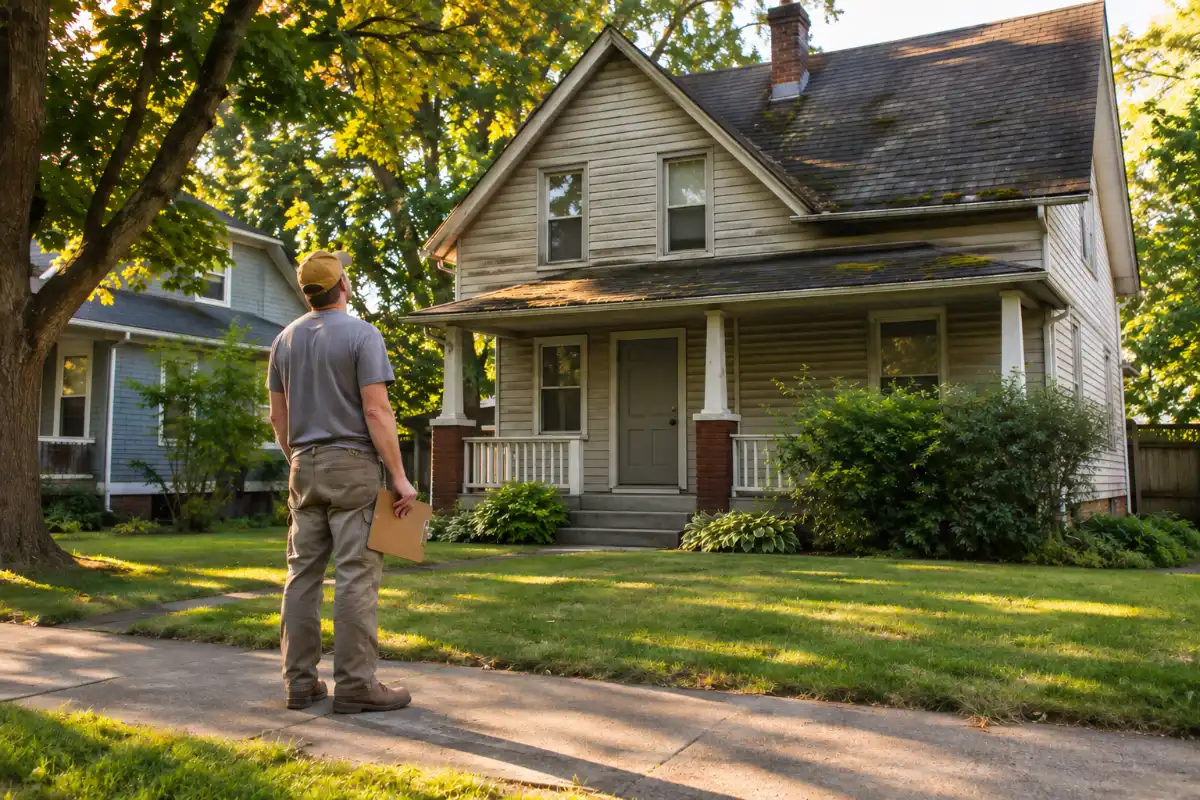
Fit and ready are not the same thing:
- Fit means checks 1 to 4 come back clear: the problem is known, the roof is in your area and a type you do, the owner can be reached, and you know the claim status. Check 5, roof age, is for planning, not pass or fail. A roof outside your area, or a home with no owner you can reach, stays a poor fit however often you call.
- Ready is check 6. A homeowner who fits but wants the roof done next spring is a good lead on a slower clock.
IKO's roofing sales guide (2022) names "three basic components to qualifying: pain, budget and authority."
Which eight questions should a roofer ask before the inspection, from leaks to roof age?
Call back first, and qualify on that first call. Our guide to speed to lead and texting rules covers how fast to reply and what to send while your crew is on a roof (texts only with consent).

Keep it short and friendly. Silvermine AI puts it plainly: "The goal is not to interrogate the homeowner." Hook Agency's common advice is that "A 2-minute call often identifies if the lead is worth pursuing." Ask permission first: "Do you have a few minutes so I can get the right person out to your roof?"
Ask in this order. The order matters: the urgent questions come first, so an active leak is never stuck behind a checklist.
- What happened, and when? "What's going on with the roof? When did you first notice it?" Hook Agency suggests the same opening question: "When did the damage occur?"
Why: a storm last week, a stain on the ceiling and a 25-year-old roof before a house sale are three different visits. - Is water coming in right now? "Is any water getting inside the house today?"
Why: an active leak goes on a same-day path (an emergency visit or a temporary fix). Dolead, a lead seller, writes that "Leads with immediate damage (e.g., 'active leak') score highest, triggering rapid dispatch." - Do you own the home? "Are you the owner, or are you renting?"
Why: only the owner can approve the work. If they rent, you ask for the owner (see "The renter path" below). IKO warns: "You may be talking to a renter who doesn't own the property." - Insurance or paying yourself, and where does the claim stand? "Is this going through insurance, or are you paying for it yourself? Have you filed a claim yet? Has an adjuster visit been set?" Hook Agency's version: "Have you filed an insurance claim?"
Why: a claim follows the insurer's steps and dates; a retail job follows the homeowner's calendar. Ask the status only (see the next section). - How old is the roof, and what work was done last? "About how old is the roof? Any repairs or a claim on it before? What kind of roof is it, and how many stories?"
Why: roof age can change what the homeowner can expect from insurance (next section), and roof type and height tell your estimator what ladder and time to plan. - Who decides, and who will be at the inspection? "Who besides you is part of the decision? Can they be there when we look at the roof?" Dolead asks: "Is anyone else involved in the decision-making who needs to be present?"
Why: see "Who should be at the inspection?" below. - When do you want it done? "Is this something you need fixed now, or are you planning ahead?" Silvermine's version: "Is this related to recent storm damage, or more of a longer-term replacement conversation?"
Why: timing decides ready or later, not good or bad. - How do you want us to reach you? "Is a call best, or would you like updates by text (texts only with consent) or email?"
Why: the confirmation and every reminder will use this channel, so ask once and write it down.
Ask in this order
- What happened, and when?
- Is water coming in right now?
- Do you own the home?
- Insurance or paying yourself, and where does the claim stand?
- How old is the roof, and what work was done last?
- Who decides, and who will be at the inspection?
- When do you want it done?
- How do you want us to reach you?
Type each answer straight into the lead's CRM record or the fit sheet below. The estimator then reads it in the truck and walks up already knowing the story.
Insurance or retail: what to ask, and what not to say
On the first call, ask only where things stand. Pick one:
- No claim; paying for it themselves (retail)
- Thinking about calling the insurer
- Claim filed, no adjuster date yet
- Adjuster visit set (write down the date)
That is all your team needs to plan the visit. Hook Agency suggests tagging leads "Insurance vs. out-of-pocket" in the CRM for the same reason.
Why roof age comes up on the same call. Insurance regulators explain that the age of a roof can change how a claim is paid. The Texas Department of Insurance writes: "As roofs age, some companies will switch to actual cash value." It also reminds homeowners that "your insurance company won't pay for a new roof just because it's old or worn out." TDI's own worked example on actual cash value shows an older roof on that kind of policy paying little or nothing after the deductible. Triple-I, the insurance industry's information group, adds: "If your roof is over 20 years old when you apply for home or business insurance, most insurance companies will require it to pass an inspection."
So asking roof age and claim status helps your team set the right expectation, not judge the homeowner. It is not coverage advice.
What your team does not say:
- Nothing about what their policy covers or whether they should file. "Your insurance agent is the right person to ask about your coverage."
- No offer to handle the claim, talk to the adjuster for them, or help with the deductible. IKO's roofing sales guide (2022) says it plainly: "a roofing company cannot sway adjusters and cannot cover deductibles."
Rules differ by state and by policy. For how claim jobs and retail jobs need different ads and form questions, see the section "How is retail roofing marketing different from insurance and storm roofing?" on our page about how we work with roofing companies. In Texas, see what Texas law allows roofers to say and do after a storm. This is general information, not legal advice; check your own state's rules.
Who should be at the inspection?
Whoever signs. If two people own the home and decide together, ask for both. An inspection with only one of them often ends with "I need to show this to my partner" and a second trip.
On the call, ask:
- "Who will sign off on the roof? Can they be there?"
- "If they can't make it, would a short call after the inspection work, so we can walk them through the photos?"
- Access: Silvermine's checklist asks "Who needs to be present? Are there weather constraints, gate codes, pets, or limited access windows?" Add attic access if your estimator checks the decking from inside.
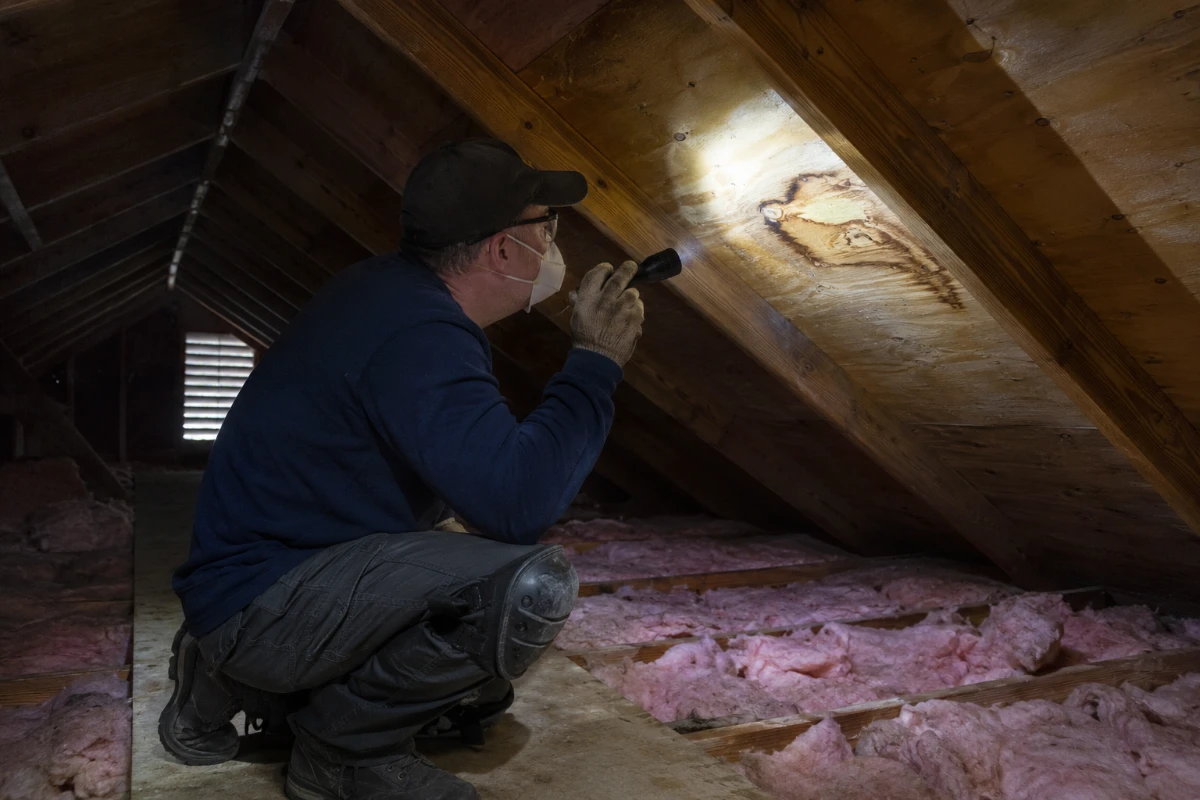
What happens on the day of the inspection itself is covered in our roofing estimate follow-up guide. For the photos and captions a partner who could not be there will see, use a roof inspection photo report.
Book now, check in after the adjuster or say no: how do you sort roofing leads?
Every lead leaves the first call with a group and a next step.
Ready: book the inspection on the same call.
The roof fits and they want it looked at soon. Offer two times, with the person who signs there. Send a confirmation by text (texts only with consent) or email: the date, who is coming, and what to have ready (gate code, pets inside, attic access).
- Active leak: the same day if you can, or a temporary fix path ("we can get a tarp on it today and do the full inspection Thursday").
- Claim with an adjuster date set: ask whether the homeowner wants the inspection before the adjuster visit, and write that date in the CRM.
Later: put them on planned check-ins.
The roof fits but there is no rush: "next spring", "after we sell", "waiting on the insurer", "the roof is old but it doesn't leak yet". Hook Agency writes that "Homeowners who “want a quote for next year” are unlikely to convert quickly." Quickly, maybe not. But they still need a roof, and they will call someone.
- Tie the check-in date to what they told you: a week after the adjuster's visit, a month before "spring", the week the house is listed.
- Bring something worth reading each time: what to look for after the next storm, how long a replacement takes, photos of a roof like theirs.
- End with one easy question, such as "Has the insurer come back to you yet?"
- Move them to "ready" the moment the timing changes.
Not a fit: a polite no, fast.
The home is outside your area, the roof is a type you don't work on, or the person renting cannot connect you to the owner. Tell them early rather than leave them waiting, and pass on a name if you know a roofer who fits: "We don't do tile roofs, but I can give you the number of a company that does." Log the reason (see "How do fit rate and inspections held show which lead source signs roofs?"). If you do tile work, say so on the first call; see tile roof marketing.
The renter path. A renter is not an automatic no. Ask: "Could you give me the owner's or the property manager's contact, or ask them to call us?" With the renter's permission, your team contacts the owner. Only if nobody can reach the owner is it "not a fit". Screen on the property and the project, never on the person.
Why is "help with the deductible" a red flag, and "waiting on the insurer" not?
Real red flags:
- Wants a price over the phone and refuses any inspection. Explain why you need to see the roof; if they still refuse, it is usually not a fit.
- The person who signs won't take part, not at the inspection and not on a call after.
- Asks you to "help with the deductible". Say no, kindly and clearly. In Texas, see the hail guide linked above.
- The job is outside your area or your roof types. Nothing wrong with the homeowner; it is simply not your roof.
Not red flags:
- "We're waiting on the insurer." That is a "later" lead with a date to watch.
- "We're getting three quotes." Most people compare roofers. Find out what they will compare on.
- "The roof is 25 years old and nothing is wrong yet." A planning lead, often a good one.
- "Do you offer financing?" A normal question about paying for a big job.
Leads that already saw a price on an online instant quote tool need one extra question ("What did the online number include?"); our instant roof quote tools guide covers how those leads behave.
The same eight questions go to every caller, and all of them are about the roof, the property and the timing. Nothing about the person: not their family, age, background or where they are from.
A six-line roofing fit sheet: claim status, roof age and who signs
Six lines, filled in during the call. A printed sheet works; so do six custom fields in your CRM. Give a line a point when the answer is "yes". This sheet is ours, a method, not a vendor score. Worked numbers in this guide show the method; they are not real client results.
| Line | Yes = 1 point | Notes |
|---|---|---|
| 1. Problem is clear (leak, storm, age, sale) | ☐ | What happened, when, water inside now? |
| 2. In our area, a roof type we do | ☐ | Address, roof type, stories |
| 3. Owner, or the owner can be reached | ☐ | Owner / property manager contact |
| 4. Claim or retail status known | ☐ | No claim / planning / filed / adjuster date; roof age |
| 5. Person who signs will be at the inspection (or on a call after) | ☐ | Names, access notes |
| 6. Wants it done within our window | ☐ | Now / this season / later |
How to read it:
- 6 points: ready. Book the inspection on the call.
- 5 points, missing only line 6: later. Planned check-ins.
- Line 2 or 3 missing: not a fit for now. Polite no and a referral, or the renter path first.
- Line 1, 4 or 5 missing: ask one more question, then score again.
An active leak skips the scoring: get someone out, then fill in the sheet.
How do fit rate and inspections held show which lead source signs roofs?
Look at it by lead source, every month. Track these:
- Leads from each source.
- Fit rate: leads that passed checks 1 to 4 (fit-sheet lines 1 to 4) ÷ all leads.
- Inspections held: how many of the inspections you set actually happened.
- Estimates sent.
- Signed jobs.
- Cost per signed job: what you spent on that source ÷ the jobs you signed from it. Our guide to cost per signed job shows how to track it.
Worked numbers in this guide show the method; they are not real client results. Two lead sources, one month:
| Source | Leads | Fit leads | Fit rate | Inspections held | Estimates sent | Signed jobs |
|---|---|---|---|---|---|---|
| Source A | 50 | 15 | 30% | 10 | 9 | 2 |
| Source B | 24 | 16 | 67% | 14 | 13 | 5 |
On a lead report, Source A looks like the winner: twice the leads. On signed roofs it loses, five to two. If both sources cost the same each month, Source B also has the far lower cost per signed job. That is why the last column matters more than the first.
Three habits keep the numbers honest:
- Log a reason for every "not a fit". Outside area, roof type, owner not reachable, wanted a phone price, and so on. Dolead's rule is that "Every time a lead is disqualified, a specific reason must be selected."
- Read the "not a fit" and "later" lists once a month. Too many good roofs under "not a fit" means your questions are too strict. "Later" leads with no check-in dates mean the plan is not running.
- Feed the results to the ad platforms. Upload fit and signed leads to Google and Meta as offline conversions; the ads then learn from roofs you signed, not from form fills. Our tracking service sets that up.
How short should roofing intake be so good leads don't disappear?
The point is fewer wasted drives, not fewer homeowners. Silvermine warns: "If the intake feels heavy, some good-fit leads will disappear before the calendar stage."
- A few form questions, not twenty. The form sorts; the call does the rest.
- The first reply comes before the checklist. Call back, then go through the questions on that same call.
- An active leak never waits for the full list.
- "Later" leads stay on the list. They are next season's roofs.
Owner, office manager or estimator: who should make the first roofing call?
Your own people: the owner, the office manager or the estimator. Someone is about to let a stranger onto their roof, so the voice they hear first should belong to your company.
A good set-up takes the busywork off those calls:
- ads and a lead form that already ask what happened, the address and the claim status;
- an instant first reply while the crew is up on a roof (texts only with consent);
- the six fit-sheet lines as CRM fields, and a reminder on every "later" check-in date;
- a monthly view of fit rate, inspections held and cost per signed job for each lead source.
Digital Hark builds that set-up: ads in your own accounts, landing pages, tracking and a CRM with a follow-up plan. Our guide to where roofing leads come from compares the sources you would measure. We never call your leads, book inspections or sell jobs; the calls and the sales stay with your team. Every ad account, page and lead is yours.
Booked the inspection? Our roofing estimate follow-up guide covers the inspection day and the days after.
Common questions
What questions should a roofer ask before an inspection?+
Ask what happened and when, whether water is coming in now, whether they own the home, whether insurance is involved and where the claim stands, how old the roof is and what work was done last, who decides and can be at the inspection, when they want it done, and how they want to be reached. Collecting these in a website chat first? See which questions a chat should ask.
Should both owners be at the roof inspection?+
If they decide together, yes: ask for whoever signs. An inspection with only one of them often ends in a second trip. If one of them can't make it, offer a short call after the inspection to walk them through the photos, and ask about gate codes, pets and attic access.
Why ask about roof age on the first call?+
Because age can change what the homeowner can expect from insurance and what your estimator looks for. The Texas Department of Insurance notes that as roofs age, some insurers switch to actual cash value. Rules differ by state and policy; coverage questions go to the homeowner's agent.
Should you ask whether they filed an insurance claim?+
Yes, but only the status: no claim, thinking about it, filed, or an adjuster date set. Don't give coverage or deductible advice, and never offer to handle the claim or the deductible. This is general information, not legal advice.
What do you do with a roofing lead that isn't ready yet?+
Keep it on a plan. Tie each check-in date to what they told you (the adjuster visit, "next spring", the house sale), bring something worth reading each time, and move the lead to "ready" as soon as the timing changes. A roof that is not urgent today still needs a roofer. Homeowner wants to talk before an inspection? See what a video call can and cannot do for a roofer.
How do you know if your lead qualifying works?+
Check each lead source every month: fit rate, inspections held, estimates sent, signed jobs and cost per signed job. Log a reason for every "not a fit" and review those reasons monthly. A source with fewer leads can still bring more signed roofs.


