
Guide · Leads
Roofing estimate follow-up: what to do after the estimate
A plain plan for the days after you send a roofing estimate: when to call, what to text and email, how insurance jobs differ from retail jobs, what to say when the homeowner is "getting other bids", and when to stop. Works in any CRM or on a paper calendar.
The short answer
Follow up on a roofing estimate with a written plan, not memory. Make the first touch within 24 hours of sending it, then call, text (texts only with consent) and email over about two weeks. Each touch adds one useful thing and one clear next step. Stop when the homeowner says no or replies STOP.
Key takeaways
- Agree the next step before you leave the roof, and send the estimate the same day or the next.
- Retail jobs follow the calendar. Insurance and storm jobs follow the claim: the adjuster meeting and the insurer's decision.
- Every touch should give the homeowner something new: a photo, an answer, a choice of times. "Just checking in" is not enough.
- Every text says how to stop (Reply STOP). If the homeowner replies STOP or a word like it, stop texting.
- Track three numbers: estimate-to-signed rate, days to sign and the reason you lost. They lead to the number that matters, cost per signed job.
Want us to find your three biggest lead leaks?
Free Growth DiagnosisHow should a roofer follow up after the estimate?
With a written plan that someone on your team owns. An estimate that nobody follows up on can go quiet even when the homeowner was interested. A plan makes sure every open estimate gets the same care, even in a busy storm season.
A good plan has four parts:
- A first touch within 24 hours of sending the estimate. Common advice in roofing sales blogs is the same: RoofSnap says to make contact within the first 24 hours of sending the estimate.
- A few more touches over about two weeks, mixing calls, texts (texts only with consent) and emails. Hook Agency suggests four to five touches spread over roughly 12 days, then a close-out. Treat these as common advice, not proof; we found no roofing study that sets the right number.
- One useful thing and one next step in every touch. A photo of the damage, an answer to a question, a financing option, two times to meet.
- A clear end. A friendly close-out message, then a seasonal check-in, and the estimate marked won or lost with a reason.
This guide is about what happens after the estimate. For the first reply to a brand-new lead, before you have even seen the roof, see our guide to speed to lead for roofers and remodelers. Remodeler? See our remodeling estimate follow-up guide for the weeks after the design consult and the proposal. Before the inspection, see our guide to qualifying roofing leads.
What should happen on the day of the inspection?
Good follow-up starts on the roof. The easier you make the decision on day 0, the less chasing you need later.
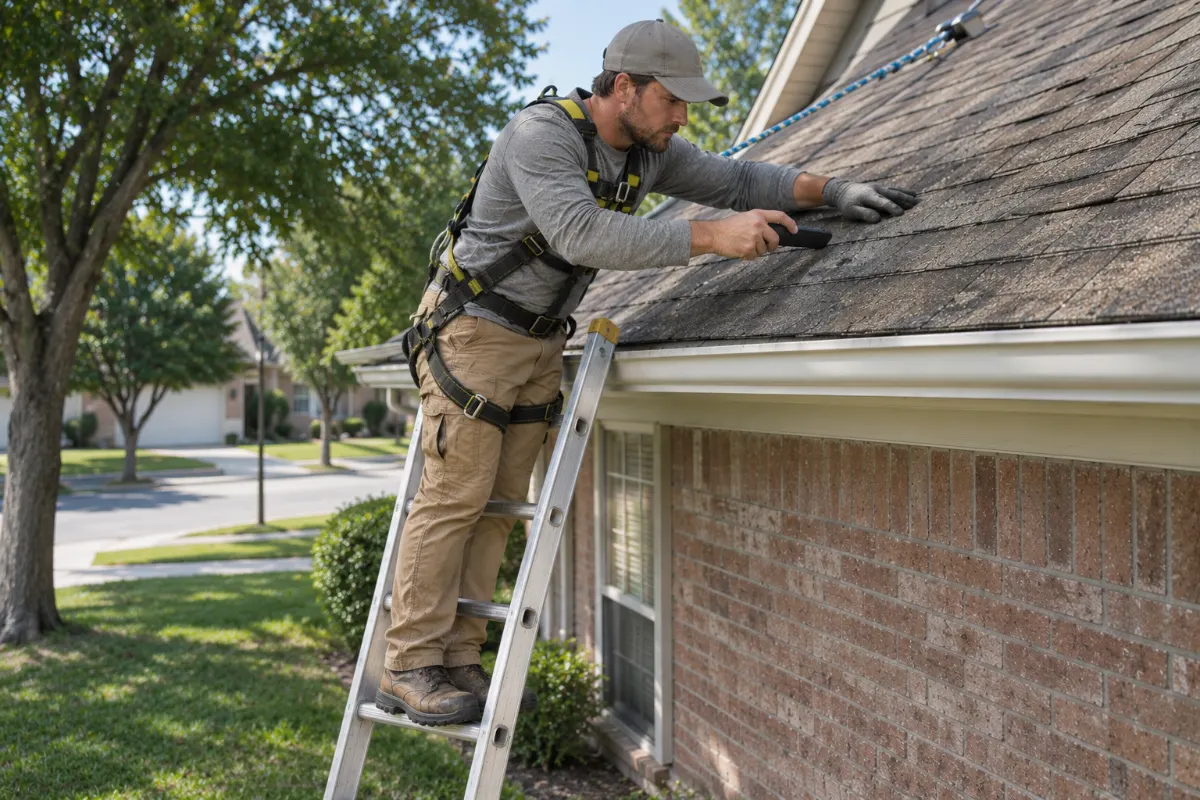
- Walk the homeowner through your photos. Show what you found, close up, before you talk about the price. The homeowner may show those photos to a spouse or compare them with another roofer's later. For what to put in the report itself, see what a roof inspection photo report should include.
- Send the estimate the same day or the next. A clear estimate says what is included, what is not, the materials, and the next step.
- Agree the next step out loud. "I will send the estimate tonight. Can I call you Thursday evening to go through it?" Write the day and time in your calendar or CRM.
- Ask how they want to hear from you. Call, text or email. If they want texts, get their consent in writing on your estimate form or contact form.
- Ask who else decides. If a spouse or a parent needs to see it, offer a short call or a second visit with both.
- Ask if insurance is involved. If it is a storm or damage claim, follow the insurance track below, not the calendar.
The days after a retail roofing estimate, day by day
Retail jobs are the ones the homeowner pays for directly: an old roof, a leak, a home sale. There is no adjuster to wait for, so a calendar works well.
The numbers and plan below are illustrative. Worked numbers in this guide show the method; they are not real client results.
| Day | Who | Channel | What to send or say |
|---|---|---|---|
| 0 | Your team | Email (+ text if they agreed) | The estimate, your photos, and the next step you agreed on the roof |
| 1 | Your estimator | Call (voicemail if no answer) | "Did the estimate come through? Any questions on the scope or the materials?" |
| 3 | Your team | Text if they agreed, else email | One useful thing: a photo of a similar roof you did, or your warranty in plain words |
| 6 | Your estimator | Call | Answer questions; offer financing details if you offer financing; offer two times to meet again |
| 10 | Your team | A short summary: what you found, what you recommend, what happens if they wait (only what your photos show) | |
| 14 | Your estimator | Text or call | Close-out: "Should I close your estimate for now, or check back in a few weeks?" |
Day by day
- Follow-up days
How to use it:
- Stop the calendar as soon as they reply. A reply turns follow-up into a conversation. Answer it, and agree a new next step.
- Skip what does not fit. If they told you "call me after the 15th", call after the 15th. The plan serves the homeowner, not the other way round.
- Use the same plan for every estimate. A CRM can create these tasks for you when you mark an estimate as sent. A paper calendar or a shared spreadsheet works too, as long as one person owns the list and checks it every day.
- Call and text at reasonable times. Daytime and early evening, never late at night, and within the hours your state allows.
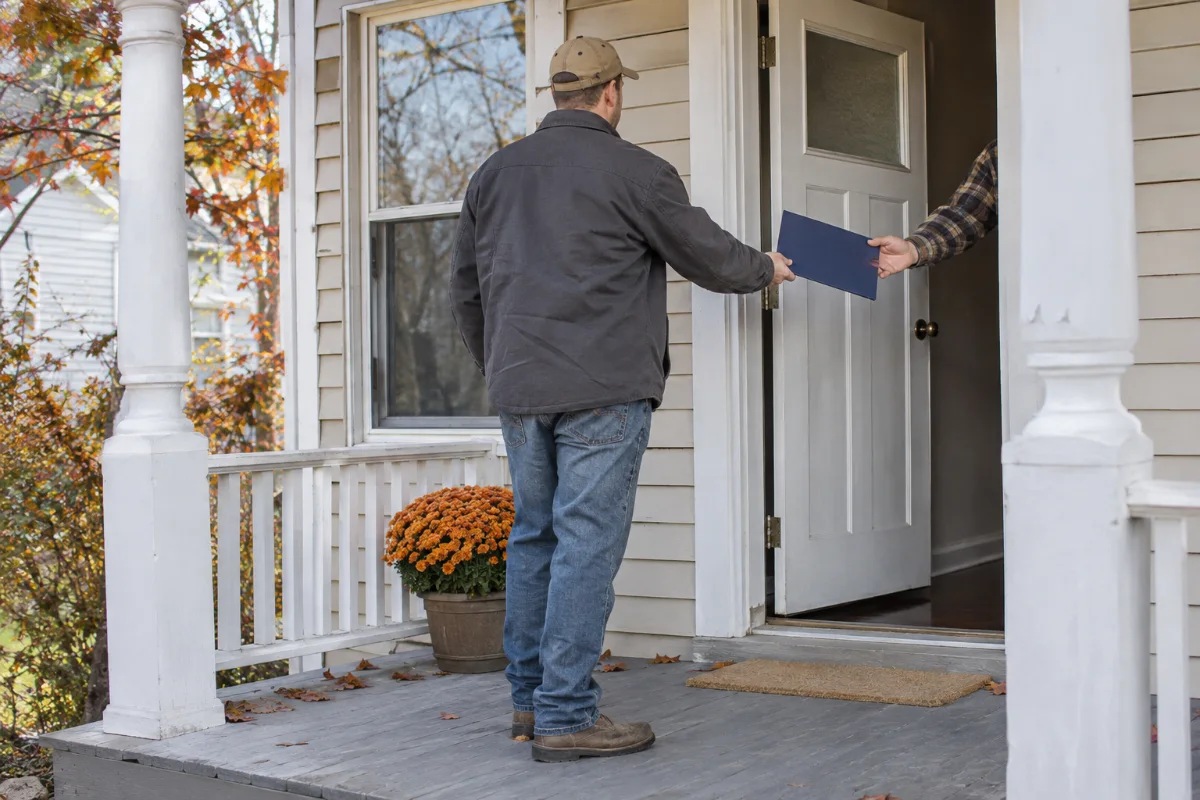
How is follow-up different for insurance and storm claims?
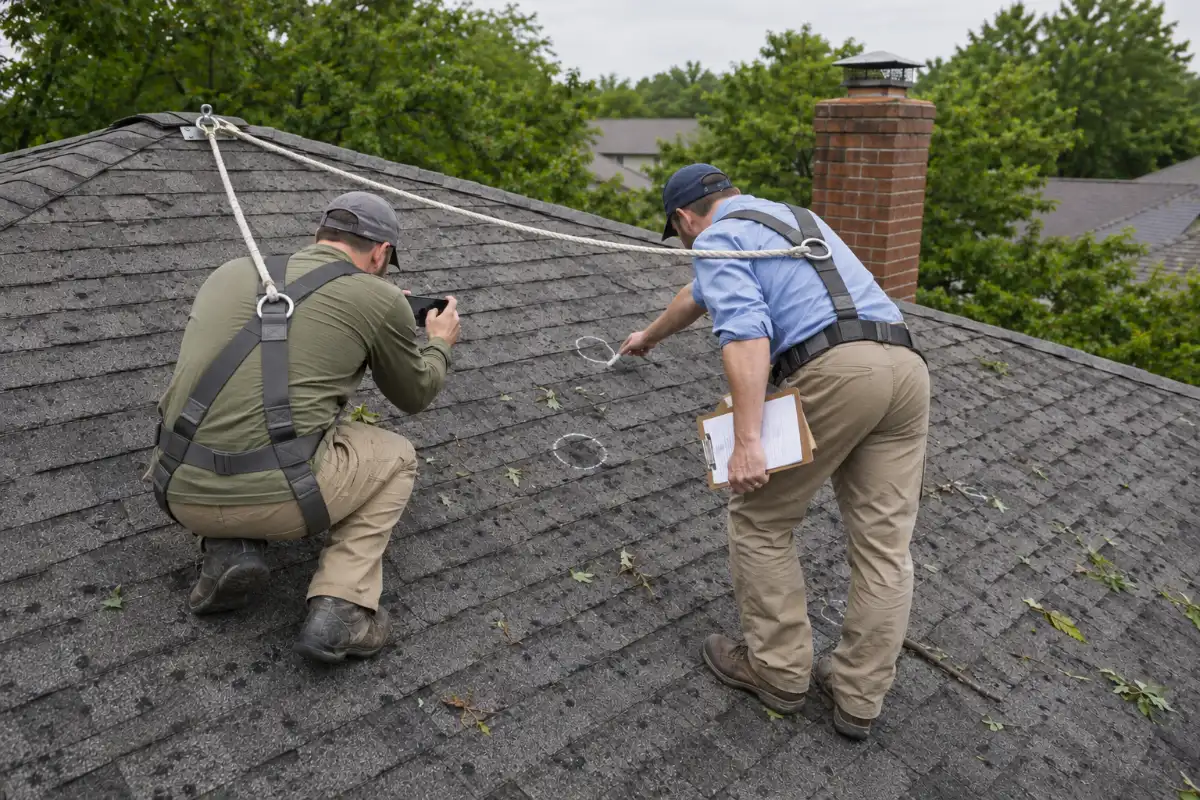
On an insurance job, the homeowner may want to wait for the claim before signing. Calling every few days while they wait on the insurer adds pressure without adding value. So tie your touches to the claim events, not to the calendar.
| Claim event | What to do |
|---|---|
| Inspection done | Send your photos and a clear damage report the same day or the next. Explain what the homeowner should do next with their insurer, in plain words. |
| Adjuster meeting set | Confirm the date and time. If the homeowner wants you there and your state allows it, be there with your photos. |
| Right after the adjuster meeting | Call the same day or the next: "How did it go? What did the adjuster say? What is the next step?" |
| Insurer decision arrives | Go through the decision with the homeowner and compare it with your estimate. Explain any difference in scope in plain words. |
| No news for a while | A short, kind check-in: "Have you heard back from your insurance company? Anything I can help you find?" |
| Approved | Agree the start date and what the homeowner pays, in writing. |
| Denied or too low | Explain the homeowner's options without promising any result. Offer a retail estimate for the work they still need. |
A few rules for the insurance track:
- Keep your role clear. You document the roof and explain your estimate. The claim is between the homeowner and their insurer. What a contractor may do in a claim differs by state, so check your state's rules before you speak for a homeowner.
- Never promise that a claim will be approved or that the roof will be "free". Talk about what your photos show, not about what the insurer will pay.
- Log every claim event in your CRM or calendar: inspection date, claim filed, adjuster meeting, decision. Then your follow-up runs on facts, not guesses.
- After a big storm, slow is better than pushy. A homeowner may hear from several roofers. A calm, helpful, well-documented follow-up can stand out.
Our guide to hail storm roofing marketing in Texas covers how to prepare your ads and pages before storm season.
What to say: text, voicemail and email scripts
Keep every message short. Use the homeowner's name, say who you are, add one useful thing and one next step. Texts only with consent, and every text says how to stop.
Day 1 voicemail
"Hi {name}, this is {rep} from {Company}. I sent your roof estimate yesterday and wanted to make sure it came through. If you have questions about the scope or the materials, call or text me at {number}. I'll try you again on {day}. Thanks."
Day 3 text (only if they agreed to texts)
"Hi {name}, {rep} from {Company}. Here's a roof we replaced near you last month, same style as yours: {photo link}. Happy to answer any questions on your estimate. Reply STOP to opt out."
Day 6 voicemail
"Hi {name}, {rep} from {Company} again. I have a couple of times free to go through your estimate with you, {day} at {time} or {day} at {time}. Call or text me at {number}. Thanks."
Day 10 email
Subject: Your roof estimate, in short
"Hi {name},
Here's a short summary of what we found on your roof and what we recommend:
- What we found: {two lines, with one photo}
- What we recommend: {one line}
- What's included: {materials, warranty, clean-up}
If anything is unclear, reply to this email or call me at {number}. If you'd rather wait, just tell me and I'll check back when it suits you.
{rep}, {Company}"
Day 14 close-out text (only if they agreed to texts)
"Hi {name}, I don't want to bother you. Should I close your roof estimate for now, or check back in a few weeks? Either is fine. Reply STOP to opt out."
Insurance: after the adjuster meeting
"Hi {name}, {rep} from {Company}. How did the adjuster visit go? If you got a decision or a scope sheet, I'm happy to go through it with you. Reply STOP to opt out."
What do you say when they're "getting other bids", "need to think" or go quiet?
These are the three answers you will hear most. None of them is a no. Each one needs a calm reply and a next step, not a discount and not pressure.
"We're getting other bids."
That is normal and fair. Help them compare like with like.
"That makes sense. When you get the other bids, check that they cover the same things: {materials}, {underlayment and flashing}, {tear-off}, {warranty}, {clean-up}. If any line is unclear, send it to me and I'll explain the difference. Can I call you {day} after you've seen them?"
"We need to think about it."
Find out what they are thinking about. Usually it is price, timing, trust or another decision-maker.
"Of course. Is it the price, the timing, or something in the estimate you're not sure about? If it helps, I can go through it with {spouse/partner} on a short call. When should I check back?"
They go quiet.
Change the channel and make it easy to answer.
"Hi {name}, {rep} from {Company}. Quick question so I don't keep bothering you: are you still planning the roof this {season}, or should I check back later? Reply STOP to opt out." (Text only if they agreed to texts; otherwise send it as an email.)
What not to do: fake deadlines, "price goes up tomorrow" when it does not, or scare talk about the roof that your photos do not show. They may win one job and cost you a review.
Is it legal to send follow-up texts?
It can be, if you text the right way. This is general information, not legal advice. Rules change, so check your forms and texts with a lawyer.
- Get clear consent. For marketing texts sent with automated systems, the TCPA rules require prior express written consent: a signed (including electronic) agreement that clearly allows your business to send those messages. Put a clear consent checkbox and line on your estimate or contact form.
- Say how to stop in every text. End each text with "Reply STOP to opt out."
- Stop when they ask. If a homeowner replies STOP, or words like quit, end, revoke, opt out, cancel or unsubscribe, stop texting them. The rules say opt-outs must be honored within 10 business days. Stopping right away is the safe habit.
- New FCC order (FCC 26-67). The FCC adopted this order on September 30, 2026. Law-firm alerts from DLA Piper (October 20, 2026) and McGuireWoods (October 26, 2026) say it lets a business name one way to opt out, shown clearly in each text, while a reply like STOP must still be honored; the 10-business-day limit stays. An opt-out from marketing texts stops all marketing texts from that business. The order was published in the Federal Register on October 26, 2026 (91 FR 67214) and takes effect on November 25, 2026.
- Register your texting number. US carriers expect business texts from a normal 10-digit number to be registered (A2P 10DLC). Unregistered texts can be filtered.
If you use a CRM that sends follow-up texts on its own, check that it adds the stop line to every text, stops the whole sequence when someone opts out, and keeps a record of each consent.
When should you stop following up, and how do you keep the lead warm?
Stop the active follow-up when:
- the homeowner says no, or replies STOP;
- they tell you they signed with someone else;
- you have sent your close-out message and heard nothing back.
Then:
- Send one friendly close-out. "Should I close your estimate for now, or check back in a few weeks?" It is easy to answer, so it gives a quiet homeowner a simple way to reply.
- Mark the estimate won or lost, with a reason. Price, timing, chose another roofer, insurance denied, no reply. These reasons tell you what to fix.
- Set one later check-in if they said "not now": before the next storm season, or the month they named. Only by email or call, or by text if they still agree to texts.
- Ask a lost homeowner one question. "Can I ask what made you choose the other roofer?" The answer is worth more than another follow-up.
After you stop
- 1Send one friendly close-out
- 2Mark the estimate won or lost, with a reason
- 3Set one later check-in
- 4Ask a lost homeowner one question
How do you know your follow-up works?
Track three numbers every month, for retail and insurance estimates separately:
- Estimate-to-signed rate: signed jobs ÷ estimates sent.
- Days to sign: the days between sending the estimate and the signature.
- Lost reasons: how many estimates you lost to price, timing, another roofer, a denied claim or no reply.
Then connect follow-up to money with cost per signed job: what you spent to get the leads ÷ the jobs you signed from them.
The numbers below are illustrative. Worked numbers in this guide show the method; they are not real client results.
| Before a follow-up plan | After a follow-up plan | |
|---|---|---|
| Marketing spend in the month | $6,000 | $6,000 |
| Estimates sent | 40 | 40 |
| Signed jobs | 8 | 10 |
| Estimate-to-signed rate | 20% | 25% |
| Cost per signed job | $750 | $600 |
Same spend, same number of estimates. In these made-up numbers, two more signed jobs bring the cost per signed job down by $150. That is why follow-up belongs in your marketing numbers, not only in your sales habits. Our guide to cost per signed job shows how to track it by lead source.
Who should do the follow-up?
Your team. The homeowner met your estimator on the roof, so the calls should come from your estimator or your office. What a system can do is make sure nothing is forgotten:
- create the follow-up tasks when an estimate is marked as sent;
- send the confirmation email and, with consent, the reminder texts;
- remind your estimator who to call today;
- stop the sequence when the homeowner replies, signs or opts out;
- show estimate-to-signed rate and cost per signed job by lead source.
This is part of the growth system Digital Hark builds for roofing companies: ads in your own accounts, landing pages, tracking, a fast first reply (texts only with consent) and a CRM with a follow-up plan. See roofing marketing and speed to lead. We never call your leads or sell jobs for you; your team does that. You own every ad account, page and lead.
For where roofing leads come from in the first place, see our guide to roofing leads.
Common questions
How many times should a roofer follow up after an estimate?+
There is no proven magic number for roofing. A simple plan is about five touches over two weeks, mixing calls, texts (texts only with consent) and emails, then a friendly close-out message. Roofing sales blogs give similar common advice. Stop at once if the homeowner says no or replies STOP.
How soon should you follow up after sending a roofing estimate?+
Within 24 hours. A short call the next day checks that the estimate arrived and answers first questions. Better still, agree the day and time of that call with the homeowner while you are still at the house.
Should you call, text or email after a roofing estimate?+
Use all three, and ask the homeowner which they prefer. Calls are best for questions and objections, emails for the estimate and a written summary, and texts for short reminders and photos, only with the homeowner's consent and with "Reply STOP to opt out" in each text. Want to show the homeowner what you found? See what to say in a short follow-up video.
What do you say when a homeowner is getting other roofing bids?+
Say that is fair, and help them compare like with like: materials, underlayment and flashing, tear-off, warranty and clean-up. Offer to explain any line that is unclear and agree a day to talk after they have the other bids. Do not cut your price on the spot or use fake deadlines.
When should you stop following up on a roofing estimate?+
When the homeowner says no, signs with someone else, or replies STOP, and after your close-out message gets no answer. Mark the estimate lost with a reason, and if they said "not now", set one later check-in, such as before the next storm season.
Can you automate roofing follow-up texts legally?+
It can be done, with care. Get prior express written consent for automated marketing texts, put "Reply STOP to opt out" in each text, stop when someone opts out (the rules allow up to 10 business days; stop right away), and register your texting number. A new FCC order (26-67) changes some opt-out details. This is not legal advice; check with your lawyer. Not registered yet? See why unregistered business texts get filtered.


