
Guide · Google Ads / Meta ads
Spanish-language ads for contractors in Texas: Google and Meta set-up and rules
How a Texas roofer, remodeler or tree service can reach Spanish-speaking homeowners with Google and Facebook ads: what Google says about its September 2026 language change, how to build a Spanish ad group and landing page, what Meta's rules mean for Spanish-language ads, and how to reply and measure by language.

The short answer
Write Spanish-language ads; do not just switch a setting. Google says that starting in September 2026, Search ads match by the language of the ad, so build a Spanish ad group with Spanish keywords, ads and landing page. On Meta, write in Spanish, follow the Housing limits and never refer to the viewer's ethnicity. Reply in Spanish too.
Key takeaways
- Google says that starting in September 2026, Search ads match by the language of the ad, not by a campaign language setting. Your Spanish ad, sent to a Spanish page, does that work.
- A translation is a first draft. Have a fluent Spanish speaker check every ad and page before it runs.
- On Facebook and Instagram, write by language, never by who the person is. "Hablamos español" is about you; a line about the viewer's ethnicity is not allowed.
- The reply must match the ad: a Spanish form, a Spanish consent line, and someone who can answer in Spanish.
- Measure Spanish-language leads on their own, down to signed jobs.
Want us to find your three biggest lead leaks?
Free Growth DiagnosisShould Texas contractors run Spanish-language ads?
If you serve homeowners who prefer Spanish, or want to, yes, it is worth testing. The US Census Bureau says: "More than 1 in 5 people (22%) age 5 and older in the United States spoke a language other than English at home during the five-year period from 2017 to 2021." It adds: "Among people who spoke a language other than English, approximately 61% spoke Spanish." If your team already talks with homeowners in Spanish in Houston, San Antonio, Dallas–Fort Worth, Austin or anywhere else you work, your ads can say so too.
Two things to keep in mind before you start:
- Many homeowners use both languages. Google's own help page gives the example of a person who may "enter a query in Spanish and be served an ad in English." So a Spanish-language campaign does not replace your English one. Keep English running and add Spanish next to it.
- Language is not ethnicity. Plan around the language people search, read and talk in, not around who they are. That is better marketing, and as you will see below, it is also what Google's and Meta's rules point to.
We do not state search volumes or costs for Spanish-language searches here, because none were measured. Check the real searches for your area in your own Keyword Planner before you plan a budget.
How does Google decide who sees a Spanish-language ad?
Google is changing how this works. Google says that starting in September 2026, for Search campaigns, "The campaign-level language targeting setting will be removed. Search ads will automatically match based on the language of your ads." It also says: "We prioritize ads that match the user's search term language."
Google lists the signals it uses: "Google Ads uses search term language, the user's language settings, and preferences to understand which language the user knows, and attempts to serve the best ad available in a language the user understands." And on its location and language page: "Multilingual users may find ads in a different language than they search if Google is confident the user understands the language of the ad."
What this means for you:
- On Search, the words of your ad are the language setting. A Spanish ad is matched to Spanish searches. An English ad can still show to a bilingual person who searched in Spanish.
- Older advice is out of date. Google says "No action is required by advertisers for this change." What you do need is real Spanish ads.
- Other channels still use language settings. Google says the change covers Search campaigns and the Search part of Performance Max. In Performance Max, "the language settings you select will continue to apply to other channels within your Performance Max campaign, such as YouTube, Display, Discover, and Gmail." So on those channels, set Spanish where you want Spanish ads to show.
How do you set up a Spanish-language Google Ads campaign?
Build the Spanish layer on top of a sound English set-up. The basics (campaign types, match types, and the settings that waste money) are in our Google Ads guide for contractors, including the section "Which Google Ads settings waste a contractor's money?". For Spanish, add:
- Its own ad group or campaign. Keep Spanish keywords and Spanish ads apart from English ones, so each has its own ads, its own budget decision and its own numbers.
- Spanish keywords, researched, not translated word for word. People do not always search the way a dictionary translates. Start from the words your Spanish-speaking customers and crew really use, and check each one in Keyword Planner for your area.
- Spanish ads. Headlines and descriptions fully in Spanish, about your service and your area, for example "Reparación de techos en Houston". Do not mix English and Spanish in one ad unless that is how your customers really talk.
- A Spanish landing page. Google says "It's also a good idea to keep your language and location targeting settings consistent", and, for English speakers, to "be sure that your ads are written in English." The same logic works for Spanish: a Spanish ad should open a Spanish page with the same offer, a Spanish form and a Spanish call button.
- Location = your real service area. For a local contractor, "Presence" targeting (people in or regularly in your area) is usually the right choice; Google suggests considering it when "You only want to target users in specific locations."
If you use Local Services Ads, those are a separate set-up; see our Local Services Ads guide for roofers.
One rule does not change with the language: for housing ads in the US and Canada, Google says "you can't target audiences using" gender, age, parental status, marital status or ZIP codes. Google also lists "Race and ethnicity" as a sensitive interest category. So target by area and language, not by who people are. Our retargeting guide covers the housing limits in more detail.
Should you translate your English ads or write new ones?
Write them, with translation as a starting point at most.
Google offers an "AI campaign localization tool for Search campaigns (beta)". Google says: "You can use the AI campaign localization tool to quickly localize entire Search campaigns for new languages and regions using generative AI." Its target languages include "Spanish (Latin American & Caribbean)" and "Spanish (Castilian/Spain)", and "The tool can be used to translate campaigns with English (US) as the original source language." It is a beta tool you choose to use; Google does not translate your ads by itself.
Google's page also says: "You don't need prior knowledge of the target language to review your new campaign." Our advice is different: have a fluent Spanish speaker, ideally someone from your area, read every ad, keyword and page before it runs. A machine can pick a correct word that homeowners in Texas never use, or pick Spain's Spanish over the Spanish your customers speak.
Things to check with that person:
- Trade words. For example, check how your customers say roof, roof repair, kitchen remodel or contractor (words like techo, reparación de techos, remodelación de cocina, contratista). These are words to check, not a keyword list.
- Formal or informal. Decide whether your ads speak to the homeowner as "usted" or "tú", and keep it the same in ads, page and replies.
- Spelling and accents. Spanish is a supported ad language in Google Ads ("Spanish (Latin American and European)"). Google warns that "Ads created in a language that isn't supported for ads language targeting will be disapproved." Spanish is supported, so the risk is a poor ad, not a rejected one. Careless mixed-language text still looks careless.
Can you target Spanish speakers in Meta's Housing category?
Here is what is confirmed, and what is not.
Many roofing, remodeling and repair ads fall into Meta's Housing category, which limits targeting. The limits (age, gender, ZIP codes, radius, lookalike audiences) are in our guide to which Meta rules limit contractor ads. We do not repeat them here.
On language: Meta's published Housing limits do not list language. Check the Languages option in Ads Manager after you choose the Housing category.
Either way, the ad itself does most of the work. A Facebook or Instagram ad written fully in Spanish, with a Spanish form or page behind it, speaks to the people who read Spanish, whatever the audience settings show. And Meta's developer docs say that in these categories, "audience options describing or appearing to relate to protected classes which may include demographics, behaviors, or interests, are unavailable." So do not look for ways to target by ethnicity; build the campaign around language and your service area.
What should a Spanish-language ad say, and not say?
Talk about your business and your service. Never talk about who the viewer is.
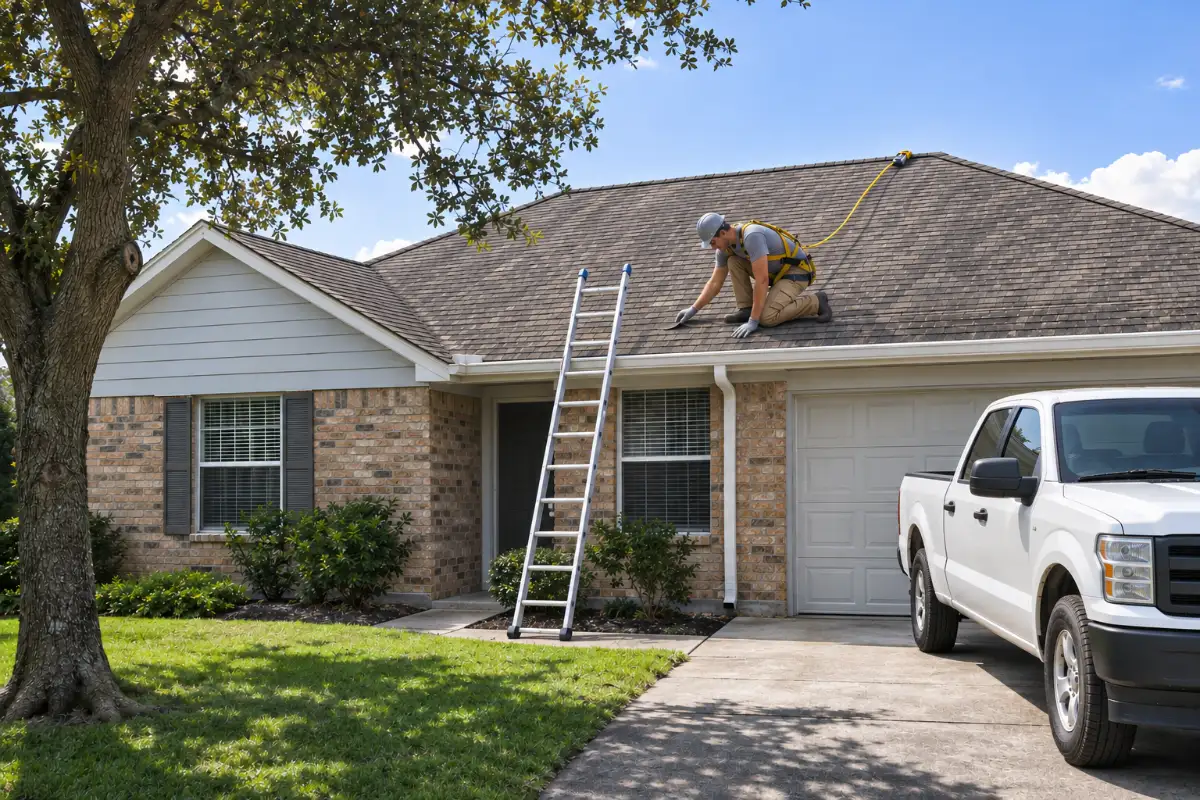
Meta's ad standards say: "ads must not contain content that asserts or implies personal attributes." This "includes direct or indirect assertions or implications about a person's race, ethnicity, religion, beliefs, age, … vulnerable financial status". Our Facebook ads guide covers this rule in English; it applies the same way in Spanish.
- Fine: "Hablamos español. Inspección de techo en San Antonio." It says what you offer and that your team speaks Spanish.
- Not fine: any line that says or implies the viewer is Hispanic or Latino, or that guesses their money situation, like "For Latino homeowners like you" or "Behind on payments?" in any language.
Texas rules apply in every language. The Texas Department of Insurance rules on deductibles and public adjusters, summed up in "Texas rules that shape roofing ads" on our Texas contractor marketing page, cover a Spanish storm ad the same way as an English one. For storm wording, see how storm ads should be worded in Texas. This is general information, not legal advice. Check your own ads with your lawyer.
What should happen after a Spanish-speaking lead comes in?
The reply has to match the ad. A homeowner who clicked a Spanish ad and then gets an English-only form, voicemail or text (texts only with consent) may stop there.
- A Spanish form or page. Whether you use a Meta lead form or a landing page (our lead form vs landing page guide compares them), write it all in Spanish: questions, buttons and the thank-you message.
- A Spanish consent line for texts. If you text replies, ask for consent in Spanish on the form, for example "Acepto recibir mensajes de texto sobre mi solicitud." Texts only with consent, in any language. The rules to check first (consent, opt-out words, registration of your number) are in what texting rules you should check first. For Texas, our Texas page covers SB 140 in "Texting leads in Texas".
- Someone who answers in Spanish. Decide before launch who on your team takes Spanish calls and replies, and at what hours. If nobody can, do not run the ads yet.
- A Spanish missed-call text. If you use missed-call text-back, write a Spanish version for calls from your Spanish ads, again only to people who agreed to texts. See what the missed-call text should say.
This is not legal advice. Ask your lawyer whether your consent wording and texting set-up meet the rules that apply to you.
How do you know your Spanish-language ads work?
Give language its own row in your numbers.
- Keep Spanish in its own campaign or ad group, so its clicks and leads are separate.
- Add a "language" field in your CRM and fill it for every lead, from any source.
- Track Spanish leads to inspections or consults held, proposals sent and signed jobs.
- Compare cost per signed job by language: what you spent on the Spanish campaign ÷ the jobs you signed from it.
Worked numbers in this guide show the method; they are not real client results. For example: over a quarter, the Spanish ad group brings 25 leads, 10 inspections and 3 signed jobs; the English campaign brings 80 leads, 30 inspections and 9 signed jobs. Without a language field, those 3 Spanish jobs would vanish into one total. Divide each campaign's spend by its signed jobs to see what a signed job costs in each language; your own numbers decide, not a rule of thumb.
Judge it over a quarter or more, not a week. Our guide to cost per signed job shows how to set it up by source, and call and lead tracking is how calls, forms and signed jobs get tied back to each campaign.
Where Digital Hark fits
Digital Hark builds the growth system for home-service contractors: Google and Meta ads in your own accounts, landing pages, tracking of calls, forms and signed jobs, and a fast first reply and follow-up list (texts only with consent). Your team calls the homeowners, inspects and sells the jobs; we never call your leads or sell for you. You own every ad account, page and lead.
Common questions
Does Google Ads still have language targeting?+
For Search, Google says that starting in September 2026 the campaign-level language setting will be removed and "Search ads will automatically match based on the language of your ads." In Performance Max, language settings still apply to YouTube, Display, Discover and Gmail. So for Search, write the ad in the language you want to reach.
Will Google translate my ads into Spanish?+
Not by itself. Google offers an optional AI campaign localization tool for Search campaigns, in beta, that can translate a campaign from English (US) into Spanish. Treat the result as a draft and have a fluent Spanish speaker check every ad, keyword and page before it runs.
Can bilingual homeowners see my English ads?+
Yes. Google says multilingual users may see ads in a different language than they search if Google is confident they understand that language. That is one reason to keep your English campaign running when you add Spanish.
Can I target Spanish speakers with Facebook Housing ads?+
Meta's published Housing limits do not list language. Check the Languages option in Ads Manager after you choose the Housing category. Either way, an ad written fully in Spanish, with a Spanish form behind it, does most of the work.
Can my ad say "Hablamos español"?+
Yes, that line is about your business, not about the viewer. Meta's ad standards ban ads that assert or imply a person's personal attributes, including race or ethnicity, so never write a line that says or implies the viewer is Hispanic or Latino.
Do I need a Spanish landing page?+
Yes, if you run Spanish ads. Google calls it "a good idea" to keep language settings consistent and your ads written in that language, and a homeowner who clicks a Spanish ad expects a Spanish page, form and reply. Send Spanish ads to a Spanish page with the same offer.


