
Guide · Roofing
2027 roofing marketing plan: a month-by-month calendar and a one-page planning sheet
One page for the whole roofing year: what to run, fix and follow up from April to October, how to be ready before storm season in your area, and a quarterly check that keeps the plan honest. Storm seasons come from NOAA's own pages, not from a vendor.

The short answer
A roofing marketing plan for 2027 is one page that says what you run, fix and follow up each month, built from last year's signed jobs by month and source and from the storm season in your area. Get storm campaigns ready before your first storm month, keep a baseline in slow months, and check the plan every quarter.
Key takeaways
- Plan in signed jobs, not leads. Start from last year's signed jobs by month and by lead source.
- Your storm months depend on where you work. The Storm Prediction Center says tornado season moves north through the year; the Atlantic hurricane season runs June 1 to November 30.
- Build storm campaigns before your first storm month, then keep them paused until you need them.
- Keep the whole plan on one page: busy, slow and storm months, budget, campaigns, follow-up, referrals, reviews and check dates.
- Check the plan every quarter against the same months last year, by cost per signed job.
Want us to find your three biggest lead leaks?
Free Growth DiagnosisWhat should a 2027 roofing marketing plan include?
A plan is only useful if it fits on one page and you look at it. Most plan templates you will find give months and percentages with no source. Use your own numbers and the weather service instead.
A roofing marketing plan should answer seven questions:
- What is the goal, in signed jobs? Not leads, not clicks. A month with fewer leads and more signed roofs is a better month.
- Which months are busy, slow and stormy for you? From your own records and the weather service (next section).
- Which channels do you run, and in what order? If you are still setting up channels, our guide to a digital marketing plan for contractors covers which ones to set up first. This guide does not repeat it.
- What is the yearly budget? Set the yearly number with our roofing and remodeling marketing budget guide. This guide has no budget math.
- What happens to every lead after the first call? Follow-up on open estimates, "later" leads, referral asks and review asks.
- What must be ready before storm season? Campaigns, pages, tracking and who answers the phone.
- When do you check it? Put four check dates on the sheet now, one per quarter.
How often should the plan change? Service Direct, one company that sells leads to contractors, gives this advice: "Update your marketing plan at least annually or when significant changes in your business goals, market conditions, or customer needs occur." That is one company's advice, not data. A quarterly check, plus a note after every big storm, keeps the yearly update small.
Plan templates also disagree on when to write the plan. What matters is that the plan is ready before your first busy month.
How do you find your busy, slow and storm months?
Start with last year. Pull last year's inquiries, inspections and signed jobs by month and by lead source from your CRM, your job list or your invoices. Fill in one row per month:
| Month | Leads | Inspections | Signed jobs | Main lead source |
|---|---|---|---|---|
| January | your number | your number | your number | your source |
| February | your number | your number | your number | your source |
| … one row per month … | ||||
| December | your number | your number | your number | your source |
The months where signed jobs rise are your busy season. The months where they drop are your slow season. The source column shows which channel carried which months. Our guide to cost per signed job shows how to add what each signed job cost.
Then add the storm months for your area. Use the weather service, not a sales page:
- Tornadoes and severe storms. The NOAA Storm Prediction Center says: "There is a general northward shift in 'tornado season' in the U. S. from late winter through mid summer." "The peak period for tornadoes in the southern Plains, for example, is during May into early June." "On the Gulf Coast, it is earlier during the spring; in the northern Plains and upper Midwest, it is June or July." NOAA's National Severe Storms Laboratory puts it the same way: "the tornado season comes early in the south and later in the north".
- Hurricanes (Gulf and East Coast). The National Hurricane Center says: "The Atlantic hurricane season runs from June 1 to November 30." and "The peak of the Atlantic hurricane season is September 10, with most activity occurring between mid-August and mid-October." The Climate Prediction Center adds that "The vast majority of tropical storms and hurricanes are typically seen during August-October (ASO), the peak months of the hurricane season."
- Hail. NSSL says "Nebraska, Colorado, and Wyoming usually have the most hailstorms" and that "hail alley", where the three states meet, "averages seven to nine hail days per year", but gives no hail months; for hail timing, see our Texas hail storm guide on when roofers should start hail season marketing.
These are weather seasons, not lead counts. They tell you when to be ready, not how many calls you will get. Mark your storm months on the sheet, then let your own numbers show what a storm does to your phone.
The one-page planning sheet
This is the plan. One row per item, one line per answer, and a column that points to the guide with the details. The third column shows how one roofer might fill it in; those rows are example, not data. Replace them with your own.
| Row | What to write | How one roofer might fill it in (example, not data) | Where to learn more |
|---|---|---|---|
| 1. Last year by month and source | Signed jobs per month and the main source for each month | "Busiest months spring to early fall; most signed jobs from referrals and Google search" | Cost per signed job |
| 2. Storm months for your area | Your tornado, hail and hurricane months from the weather service | "Severe storms in spring; coastal crew watches hurricane season" | Storm Prediction Center and National Hurricane Center |
| 3. Slow months | The months where signed jobs dropped last year | "Mid-winter" | Our winter roofing marketing plan |
| 4. Yearly budget | The yearly number, and the rule for raising or cutting it | "Set from the budget guide, checked each quarter" | Budget guide |
| 5. Campaigns built and paused | Storm campaign, spring campaign, hurricane campaign if you work the coast | "Storm campaign approved and paused before the first storm month" | Google Ads for roofers |
| 6. Open estimates and "later" leads | Every estimate that did not sign, and every "later" lead with the month they named | "Later lead: wants the roof after the summer; follow up in the month they named" | Our roofing estimate follow-up guide and our guide to qualifying roofing leads |
| 7. Referral asks | When your team asks: at every handover | "Ask at the final walk-through, once the customer has seen the roof" | Our roofing referral program guide |
| 8. Reviews and profile | A monthly review ask and a monthly profile check | "First week of each month: review asks and profile check" | Google reviews for contractors and our Google Business Profile guide for roofers |
| 9. Signs and postcards around jobs | The job-by-job routine for the street around each roof | "Sign and neighbor postcards on every job where the customer says yes" | Our roofing yard sign guide |
| 10. Quarterly check dates | Four dates, one per quarter | "Last Friday of each quarter" | "How do you check the plan each quarter?" below |
Keep the sheet where the team sees it. If a row is empty, that is the first thing to fix.
The "later" leads in row 6 come from qualifying: a lead who is a fit but not ready goes on the sheet with the month they named. Our guide to qualifying roofing leads explains the ready, later and not-a-fit groups.
A month-by-month roofing marketing calendar, April to October
This calendar is written for a roofer whose busy months run spring to fall. Shift it a month earlier or later for your area and your own numbers. Each row is something you do, not a claim about what homeowners do.
| Month | Ads | Pipeline and follow-up | Get ready and check |
|---|---|---|---|
| November to March | See our winter roofing marketing plan. | ||
| April | Switch spring campaigns on in steps as your own calls rise, not all at once. Gulf Coast: storm campaign should already be ready (SPC: tornado season is "earlier during the spring" there). | Book inspections fast; log every lead's source from the first call. | Storm campaign checked: approved, paused, landing page and tracking tested. Monthly review asks and profile check. |
| May | Southern Plains: storm campaign ready to switch on (SPC: peak "during May into early June"). | Follow up every estimate from April. | Phone cover set for storm days: who answers, and until when. |
| June | Gulf and East Coast: hurricane campaign ready by June 1 (NHC). Northern Plains and upper Midwest: storm campaign ready ("June or July", SPC). | Ask for referrals at every handover. | Photograph finished jobs (with the customer's yes) for ads and your profile. End of quarter: run the quarterly check. |
| July | Keep ads steady while crews are busy; check search terms. | Review and referral asks at every handover. | Signs and neighbor postcards around jobs, inside the rules. |
| August | Coastal: hurricane campaign re-checked before mid-August (NHC: most activity "between mid-August and mid-October"). | Follow up open estimates from spring. | Check "later" leads: whose month has come? |
| September | Hurricane peak, September 10 (NHC). Storm response only where a storm hit. Fall inspection offers, with no prices. | Fast replies after storms (texts only with consent). | End of quarter: run the quarterly check; note every storm on the sheet. |
| October | Keep a baseline running. | Follow up every open estimate before the slow months; move "later" leads to their month. | Note what this season's storms did to your calls and signed jobs. |
April: switch on in steps. Raise budgets as your own calls rise. Before the first storm month in your area, the storm campaign is built, approved and paused, and the landing page and tracking are tested.
May and June: storm months move north. The Storm Prediction Center's dates tell you when your area's campaign should be ready to switch on. On the Gulf and East Coast, the hurricane campaign is ready by June 1.
July: keep the machine running while the crews are busy. This is when follow-up, review asks and referral asks slip. Put them on the handover checklist so they happen anyway.
August and September: coastal watch. The National Hurricane Center puts most activity between mid-August and mid-October. Re-check the hurricane campaign, the phone cover and the follow-up list before mid-August.
October: empty the pipeline. Follow up every open estimate and move each "later" lead to the month they named.
Remodelers: our remodeler marketing calendar follows the same idea for remodeling jobs. Tree service companies: our tree service marketing budget guide looks at the year season by season.
How do you get ready for storm season before it starts?
Be ready before the first storm day, not after it. Have these five things done before your first storm month:
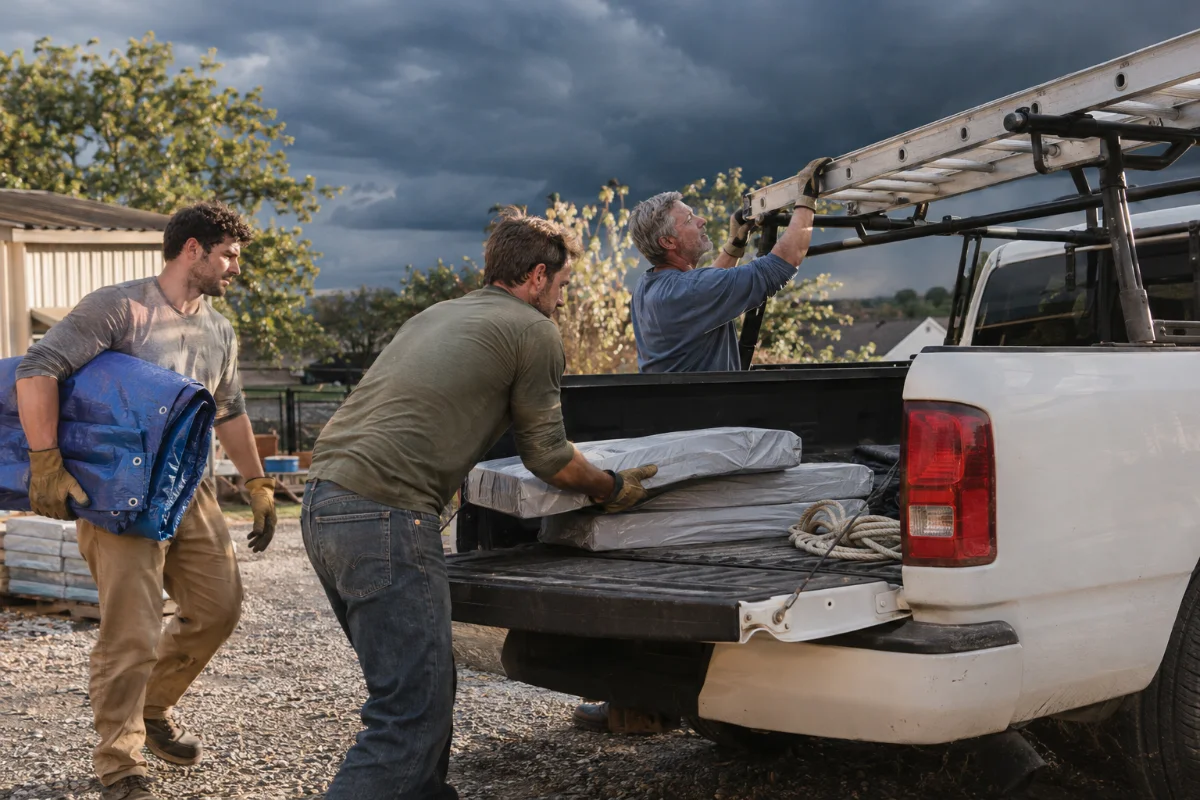
- A storm campaign built, approved and paused. Ready to switch on the day a storm hits your area. Our guide to Google Ads for roofers covers the set-up.
- A storm landing page with your own storm jobs. Real photos of roofs you fixed after storms (with the customer's yes), your license where required, one clear way to reach you.
- Call and form tracking that works. Test every number and form before the season, so every storm lead shows its source.
- Someone to answer the phone. Write down who answers on storm days, after hours and on weekends. A storm lead that waits may call the next roofer.
- A follow-up list. Every inspection after a storm goes on one list with a next step and a date. Any text follow-up goes only to people who agreed to get texts (texts only with consent).
In Texas, use our storm-ready 10-point checklist; the same guide covers the first 30 days after a hail storm. Outside Texas, check your state's storm rules for ads, contracts and deductibles before the season; our storm-state deductible law guide covers several states. This guide does not repeat ad wording or law.
Where do follow-up and referrals fit in the year?
All year, on every lead. They cost less than new leads, and they are the first things to slip in a busy month.
- Estimate follow-up runs all year, heavier in October before the slow months. Our roofing estimate follow-up guide covers the steps and when to stop (texts only with consent).
- "Later" leads go on the planning sheet with the month they named, and someone calls them in that month.
- Referral asks happen at every handover, when the customer has seen the finished roof. Our roofing referral program guide covers who to ask and when, and which state rules limit rewards.
- Review asks follow the same handover. See Google reviews for contractors for how to ask.
How do you check the plan each quarter?
Four times a year, on the dates in row 10 of the sheet, spend one hour on these five checks:
- Compare each month with the same month last year, not with the month before. A slow month next to a storm month always looks bad.
- Look at cost per signed job by source. What you spent on each channel ÷ the jobs you signed from it. Our cost per signed job guide shows the method.
- Move budget only by the rules in our budget guide. No budget math here.
- Note every storm on the sheet: the date, the area, and what it did to your calls and signed jobs. Next year's plan starts from these notes.
- Fix one empty row. If the follow-up list, the referral asks or the profile check slipped, that is the fix for next quarter.
There is no benchmark to beat. The plan works if your cost per signed job holds or falls against the same months last year, and if the storm campaign was ready on the first storm day.
Where Digital Hark fits
Your team answers the calls, runs the inspections and sells the roofs. Digital Hark builds the part behind the plan: Google and Facebook ads in your own accounts, storm campaigns built and paused before the season, landing pages, call and form tracking that shows signed jobs by month and source, fast replies (texts only with consent) and a CRM with a follow-up plan. We never call your leads, book inspections or sell jobs for you. Every account, page and lead is yours. More on how we work with roofing companies.
2027 plan checklist
- ☐ Last year's leads, inspections and signed jobs filled in by month and source
- ☐ Busy, slow and storm months marked for your area
- ☐ Yearly budget set with the budget guide
- ☐ Storm campaign built, approved and paused before the first storm month
- ☐ Hurricane campaign ready by June 1 if you work the Gulf or East Coast
- ☐ Storm landing page with your own storm jobs, and tracking tested
- ☐ Phone cover written down for storm days, evenings and weekends
- ☐ Open estimates and "later" leads on the sheet with a month
- ☐ Referral and review asks on the handover checklist
- ☐ Four quarterly check dates on the calendar
Common questions
What should a roofing marketing plan include?+
Your goal in signed jobs, your busy, slow and storm months, the channels you run, the yearly budget, what happens to every lead after the first call, what must be ready before storm season, and four quarterly check dates. Keep it on one page.
When is storm season for roofers?+
It depends on where you work. The Storm Prediction Center says tornado season moves north: earlier in spring on the Gulf Coast, May into early June in the southern Plains, and June or July in the northern Plains and upper Midwest. The Atlantic hurricane season runs June 1 to November 30, with a peak on September 10.
When should roofers get ready for storm season?+
Before your first storm month. Build the storm campaign, get it approved and keep it paused; test the landing page, tracking and phone cover. On the Gulf and East Coast, have the hurricane campaign ready by June 1, when the season opens.
Should roofers market all year?+
Keep a baseline running all year and change what you run with the season. Spring to fall carries the main campaigns; in the slow months, lower the spend and work the leads you already have. Our winter roofing marketing plan covers November to March.
How much should a roofer spend on marketing?+
Set the yearly number from your own cost per signed job, not a general rule. Our roofing and remodeling marketing budget guide shows how, and when to raise or cut it.
How often should you update a roofing marketing plan?+
Check it every quarter against the same months last year, and add a note after every big storm. Service Direct, one company that sells leads, advises updating a plan "at least annually" or when your goals or market change; that is one company's advice, not data.


