
Guide · Remodeling
Aging-in-place remodeling marketing: how to reach older homeowners and their families when ads can't target age
Why the ad, not the ad platform, has to find the buyer; what the 2024 and 2025 demand numbers say; what to put in your words, photos, forms and landing page; whether CAPS is worth it; and how to tell if the work pays.
The short answer
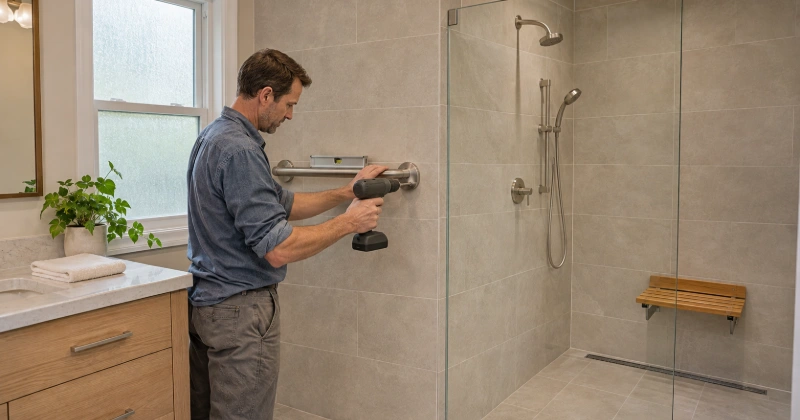
Market the job, not the age. If your ads fall under Meta's Housing category (or Google's housing rules), you can't pick an age group, so your words, photos, offer and form do the targeting: curbless showers, grab bars, step-free entries, written for homeowners and the families who help. Back it with a dedicated page, referral partners and credentials like CAPS.
Key takeaways
- AARP's 2024 survey: 75% of adults 50 and older want to stay in their current homes as they age. Among those planning home changes, 72% plan bathroom upgrades and 71% plan changes that make it easier to get into or around the home.
- In NAHB's Q1 2025 survey of remodelers, only 56% said they do aging-in-place projects, the lowest share since NAHB began asking in 2004. Grab bars, curb-less showers, higher toilets and wider doorways were the jobs they reported most.
- If your ads fall in a housing category, you cannot narrow them by age. The job you show, the words you use and the questions on your form pick the buyer instead.
- CAPS is a credential you can show homeowners, and NCOA tells homeowners to look for certified aging-in-place specialists. NAHB's pages do not say it brings leads.
- Run aging-in-place jobs as their own campaign or ad group, and judge them by cost per signed job.
Want us to find your three biggest lead leaks?
Free Growth DiagnosisWhat is aging-in-place remodeling marketing?
It is marketing for the jobs that help people stay in their homes as they get older: walk-in and curbless showers, grab bars, higher toilets, wider doors, step-free entries, and a bedroom and bath on the main floor. It fits bath remodelers first, but kitchen and general remodelers do this work too. If you run a broader company, see our pages on kitchen remodeling marketing and marketing a general remodeling company.
Two things make this kind of marketing different. First, the ad platforms may not let you choose an age group, so the ad itself has to find the right people. Second, the person who fills in your form is not always the person who lives in the house. A son, daughter or spouse may be the one searching.
Is there real demand for aging-in-place remodeling?
Yes, and the numbers are recent and dated.
What adults 50 and older say (AARP, 2024). AARP's national 2024 Home and Community Preferences Survey found that "a strong majority of adults aged 50 and older (75%) wish to remain in their current homes as they age". AARP's research page adds that "some older adults (43 percent) are looking to make changes" so their home can handle future needs. "Among those planning home modifications, 72 percent are looking to upgrade the bathroom (grab bars and no-slip tile)," and 71 percent expect changes that make it easier to get into or around the home. Note the base: the 72% and 71% are shares of people planning changes, not of all adults 50 and older.
What remodelers report (NAHB, Q1 2025). NAHB's Remodeling Market Index survey asks remodelers about this work. In its Q1 2025 survey:
| What remodelers reported | Share of remodelers |
|---|---|
| Did grab bars in the last year | 87% |
| Did a curb-less shower | 78% |
| Installed higher toilets | 71% |
| Widened doorways | 52% |
| Say customers are "planning ahead for future needs" | 91% |
| Name "living with older parents" as a reason | 48% |
| Name "acute age-related disabilities" as a reason | 43% |
| Say requests have "significantly or somewhat increased over the past 5 years" | 73% |
The same survey says "Only 56% of professional remodelers undertake projects designed to allow homeowners to Age-in-Place (AIP)", which NAHB calls "the lowest percentage recorded since NAHB began periodically asking AIP questions on its RMI survey in 2004." NAHB's own explanation: "Economic uncertainty and high interest rates over the past year are the most likely explanations for this slight pullback in projects."
Our reading: most adults 50 and older want to stay in their homes, and fewer remodelers are doing this work. That leaves room for a company that makes it clear it does.
Can you target older homeowners with Facebook or Google ads?
Often not by age.
- Meta. Meta lists "housing repairs" in its Housing category, and Housing ads cannot be narrowed by age. See Meta's Housing rules for remodelers for the details.
- Google. Google's housing limits apply if your ads fall in its housing category. In that category, Google says: "In the United States and Canada, you can't target audiences using:" gender, age, parental status, marital status or ZIP codes. Google's housing page names homes for sale or rental as its scope; it does not name remodeling. So check how Google classifies your ads in your account. Our retargeting guide covers how to check.
Either way, plan as if you cannot pick an age. Then the ad has to find the buyer.
How do you reach them without age targeting?
Let the job do the targeting. A person who stops for "curbless walk-in shower, no step to climb" is your buyer, whatever their age, and so is their son who is looking for his dad.
- Search ads on the job. People type the job: walk-in shower, grab bar installation, step-free entry, wider doorways. Search keywords pick the buyer by what they want, not by who they are.
- Ad words about the job and the reason. Name the job and one of the reasons remodelers report most: planning ahead, a parent moving in, or a change in what someone can do.
- Real photos of finished rooms that look good. A curbless shower with nice tile and a grab bar that matches the fixtures says more than any headline. A JLC article in 2004 put it this way: "True universal design is a stealth product."
- An offer that fits a careful buyer. A free in-home safety walk-through, or a written plan for the bathroom now and the entry later. No pressure, no deadline.
- Form questions that sort the leads. "Who is the project for?" and "When do you need it: planning ahead, or soon?" The second question tells you which leads need a fast reply. Our bathroom remodeling page uses the same two questions on its "Accessible bathroom" job card.
- Its own campaign or ad group. Keep aging-in-place jobs apart from your general bath ads, so you can see what they cost and what they sign.
What words work in aging-in-place ads, and which should you avoid?
Talk about the room, the job and the plan, not about age. Trade advice has said this for years: a 2012 REMODELING article told remodelers to stay away from age and disability labels in their marketing, and a 2013 one listed words to avoid unless the homeowner uses them first, "aging" and "nursing home" among them. In 2026, HIRI described the same idea as "positioning accessibility as proactive planning rather than reactive necessity."
These are our suggestions, not quotes:
| Instead of | Try |
|---|---|
| A headline about getting older | A headline about the job: "A walk-in shower with no step to climb" |
| Clinical words that sound like a hospital | Room words: "a bathroom that looks good and is easy to use" |
| Fear | The plan: "Planning ahead? Add grab bars while we redo your bath" |
| "We specialize in your age group" | "Stay in the home you love, with a few smart changes" |
| Only speaking to the owner | One version for the family: "Making your parents' home easier to live in?" |
Keep the type large and the phone number and form easy to find, on the ad and on the page.
How do you market to the families who help?
Many people help someone else with their home. AARP's 2024 survey says "About half of all adults are either caregivers currently (13 percent) or expect to be at some time (34 percent)". And 48% of remodelers in NAHB's Q1 2025 survey named "living with older parents" as a reason for aging-in-place work. Neither source says who decides or who pays, so don't assume. Plan for both.
- Run a family version of your ad next to the homeowner version, and see which one signs more jobs.
- Add a short "For families" part to your page: what the visit looks like, who should be there, and that you can send the estimate to two people.
- Ask on the form who the project is for, so your team knows whom to call and whom to copy.
- Plan follow-up for families who decide together. Decisions can take longer when two or three people are involved, so space the follow-up out and keep it calm.
Our bathroom remodeling page sums this up in one band, "Safer bathrooms for aging in place".
What should an aging-in-place landing page show?
Show what homeowners are told to check, before they ask. NCOA's guide to choosing an aging-in-place contractor (October 27, 2026) tells homeowners to:
- "Double-check licensing and insurance", and ask for proof of insurance;
- ask for photos of the contractor's work and credentials, and ask for reviews from past customers;
- get at least three estimates ("Nabors advises getting at least three cost estimates from three different professionals or companies.");
- "Ask for a clear statement of work.";
- "never agree to 100% payment up front."; and
- ask whether the contractor will handle permits.
NCOA also lists red flags, including a contractor who "pressures you to sign on".

Turn each point into a block on your page: licence and insurance shown plainly, a gallery of finished aging-in-place jobs, reviews from past customers, a sample statement of work, your payment steps, how you handle permits, and a clear "no pressure" line. Add the CAPS credential if you hold it. Use large text, short sections, and a phone number and form near the top. If you need the page built, see our landing page service.
Is CAPS certification worth it for a remodeler?
It can be, as a trust signal you can show. It is not a lead source.
What it is. NAHB says its Certified Aging-in-Place Specialist (CAPS) program "teaches the technical, business management, and customer service skills" for this work, and that it is for "remodelers, builders, contractors, and occupational therapists."
How you earn it. "The CAPS program consists of three courses": CAPS I (marketing and communicating with aging-in-place clients), CAPS II (design concepts) and CAPS III (details and solutions). "Upon completion of all three courses, candidates can apply for their CAPS credential." To graduate, NAHB asks remodelers and contractors for "Proof of liability insurance and workers' compensation insurance" (where local rules require it) or work for a company that holds both, and "A valid business license (if state required)", plus a signed CAPS code of ethics pledge (or agreeing to it online).
What it costs you. NAHB lists course, graduation and renewal fees with prices for members and non-members; local course fees are set by whoever runs the class. Check the current fees on NAHB's pages. The time cost is ongoing: "NAHB credential holders are required to complete four hours or credits each year."
What you get to show. NAHB keeps a directory where people can "Search for CAPS credential holders." It offers credential holders logos for "your website, business card, and other marketing materials", a brochure and a consumer presentation. Follow NAHB's rules for using the credential logos.
Does it help with homeowners? NCOA's guide tells homeowners to look for contractors "including those who are certified aging in place specialists." That is a real trust point. But NAHB's pages do not say CAPS brings leads or jobs, so treat it like any badge: show it, track it, and decide at renewal. Use the badge test in our BBB guide, with your own numbers.
For NARI's Universal Design Certified Professional (UDCP) and trade association membership, see our NARI and NKBA guide. Doing a bathroom or kitchen job in an older home? See which kitchen and bath jobs the EPA Lead-Safe rule covers.
Which other channels bring aging-in-place jobs?
Channels that don't depend on age targeting:
- Google Business Profile. List "aging-in-place updates" and each job as a service, with photos. See our Google Business Profile guide for remodelers.
- Pinterest. People plan bathrooms there; a separate aging-in-place ad group keeps it measurable. See our Pinterest ads guide for remodelers.
- Referral partners. A 2024 contractor-software guide lists occupational therapists, physical therapists, home health agencies and discharge planners as referral partners. Your local Area Agency on Aging is another contact: NCOA says it "can advise you on current available grants, technical assistance, and reputable service providers." Ask whether they keep a provider list and how to be considered.
- Talks and open houses. A short, plain talk at a library or community center on "making your home easier to live in", with no hard sell.
- Past customers. People who had a bathroom done may have parents, or may come back for the entry.
- Meta ads for the job. Inside its Housing rules, a job-led ad with real photos can still work; the targeting just comes from the ad.
How do you handle the first call?
Ask four things early: who the project is for, who else should be at the visit, whether this is planned or needed soon, and which rooms matter most. Then have answers ready for what NCOA tells homeowners to ask: licence, insurance, photos, a statement of work, payment steps and permits.
Reply fast, but keep the tone calm. Our guides to qualifying remodeling leads and speed to lead cover the questions and the first reply (texts only with consent). Your team makes the calls and sells the job.
How do you know if aging-in-place marketing pays?
Track cost per signed job for the aging-in-place campaign on its own, apart from your other bath work. Our guide to cost per signed job shows the method.
Worked numbers in this guide show the method; they are not real client results.
Say you split the same monthly budget evenly between two ad groups (our inputs, illustrative only):
| General bath ad group | Aging-in-place ad group | |
|---|---|---|
| Leads | 30 | 12 |
| In-home visits | 9 | 7 |
| Signed jobs | 2 | 3 |
The general ad group brings more than twice the leads, but the aging-in-place group signs more jobs on the same budget, so its cost per signed job is lower. Count leads alone and you would cut the wrong one. Give each group a few months before you decide, because planned jobs can take time to sign.
Where Digital Hark fits
Digital Hark runs Google and Meta ads inside each platform's category rules, plus landing pages, tracking and follow-up systems for remodelers and other home-service contractors. For aging-in-place work, that means job-led ads, a page that answers what homeowners and their families check, and tracking that shows which source leads to signed jobs. We never call your leads or sell jobs for you; your team does that. You own every ad account, page and lead. We are not affiliated with NAHB, AARP or NCOA.
Common questions
Can I target people over 65 with Facebook ads for remodeling?+
Not if your ads fall in Meta's Housing category, which lists "housing repairs"; Housing ads cannot be narrowed by age. Our Facebook ads guide for remodelers covers the rules. Write the ad about the job, such as a walk-in shower or grab bars, and let the words, photos and form questions find the buyer.
Is CAPS certification worth it for a remodeler?+
It can be, as a trust signal. NCOA tells homeowners to look for certified aging-in-place specialists, and NAHB lists credential holders in a directory. NAHB's pages do not say CAPS brings leads, so count the course time and the four hours of continuing education each year, then track the jobs.
How do you become a Certified Aging-in-Place Specialist?+
Complete NAHB's three CAPS courses, then apply. NAHB asks remodelers for proof of liability and workers' compensation insurance where required (or work for a company that holds both), a valid business license if your state requires one, and a signed (or online) code of ethics pledge. Credential holders complete four hours or credits of continuing education each year.
What are the most common aging-in-place remodeling jobs?+
In NAHB's Q1 2025 survey of remodelers, grab bars were the most common (87% of remodelers did them in the last year), followed by curb-less showers (78%), higher toilets (71%) and wider doorways (52%).
Should I market aging-in-place work to adult children?+
Market to them as well as to the homeowner. AARP's 2024 survey says 13% of adults are caregivers now and 34% expect to be. Run a family version of your ad, ask on the form who the project is for, and plan follow-up for families who decide together.
What do older homeowners look for in a remodeler?+
NCOA tells them to check licensing and insurance, see photos of past work, read reviews from past customers, get at least three estimates, ask for a clear statement of work, never pay 100% up front, and ask about permits. Put all of it on your page. For the insurance part, see what a certificate of insurance shows.


