
Guide · Leads
How to qualify tree service leads on the first call, before you drive out to the estimate
A first-call plan for tree companies: emergency or planned, the questions to ask in order and why, whose tree it is, when power lines make it the utility's call first, how to sort every lead into ready, later or not a fit, a seven-line fit sheet, and how to check the result by signed jobs.
The short answer
Split the first call in two. A tree on the house or a wire gets the short emergency path, and a tree touching a power line is the utility's call first. Every planned job gets the full call: whose tree, where the trunk stands, how big it is, whether a truck can reach it and who approves the work.
Key takeaways
- Split the call first: a tree on the house or a wire gets the short emergency path; everything else gets the full call.
- Ask ten questions in the same order every time, and skip what your form already answered.
- Ask where the trunk stands before you plan any work: in Georgia, for example, that decides who owns the tree (rules differ by state).
- A tree touching a power line is a call to the utility first, not a job to book.
- Count signed jobs per lead source to judge your qualifying, not the number of leads.
Want us to find your three biggest lead leaks?
Free Growth DiagnosisHow do you qualify a tree service lead?
You find out, before a truck leaves the yard, whether the tree is a job you can do and win, and how soon the homeowner wants it done. Four steps:
- The form gives the first sort. Your lead form already asks what work they need, how tall the tree is, whether it is near the house or lines, whether a truck can reach it and when. Our guide to what a tree service lead form should ask lists those questions.
- The first call checks it. The owner, office manager or arborist calls back fast, checks what the form said and asks only what is missing.
- Every lead gets one of three labels: ready, later or not a fit, each with a next step.
- You check the result each month by lead source, with signed jobs as the number that counts.
This guide stops once the estimate visit is booked. The photo quote, the written estimate and everything after are in our tree estimate follow-up guide. Remodeler? The same method for your trade: how to qualify remodeling leads. Roofer? See our guide to qualifying roofing leads before the inspection. Clearing a lot or acreage instead of one tree? Our Texas guide to land clearing for tree services lists the first-call questions for that job, from gate width to debris.
What should you know about the tree before anyone drives out?
Seven checks. All of them are about the tree, the property and the timing.
| Check | What you want to know | Why it matters |
|---|---|---|
| 1. The job | Removal, trim, stump, storm damage or a health check? | Decides who goes out, what they bring and how fast. |
| 2. Area and type of work | Inside your service area, and work your crews do? | Work you sub out or don't do is not your job, however good the lead. |
| 3. Whose tree | Do they own the home? Where does the trunk stand? | Who owns it decides who can approve the work; rules differ by state. |
| 4. Power lines | Is the tree touching or near a line, or the wire to the house? | Some trees are the utility's call before they are yours. |
| 5. Size and access | Height, how close to the house, can a truck or lift reach it? | Sets crew size and equipment, and whether you may need a crane. |
| 6. Who decides | Who approves the work, and can they be at the estimate? | If the person who decides is not there, the crew often has to come back. |
| 7. Timing | Now, this season, or "sometime"? | Only moves the lead between ready and later. |
Seven checks
- 1The job
- 2Area and type of work
- 3Whose tree
- 4Power lines
- 5Size and access
- 6Who decides
- 7Timing
Fit means checks 1 to 6 come back clear (for check 4: no live-line issue, or the utility step is done). Ready is check 7. Someone who fits but wants the trim done next winter is still a good lead; it just moves slower.
Solvea, a vendor of AI answering services, makes the same point in its tree intake checklist: note "Whether the caller can authorize an assessment or work".
Emergency or planned: which call is it?
Decide this in the first minute. It changes everything after it.
Emergency: a tree or big limb on the house, a car or the driveway, a limb hanging over where people walk, or a tree on a wire. If anyone is hurt or a line is down, the caller's first call is 911 or the utility, and they stay away from it. We Energies, a Wisconsin utility, tells homeowners near its lines: "Do not attempt to remove any branches yourself." For everything else on the emergency path, your team uses its storm triage and callback order; our storm cleanup guide covers both in "How do you handle the call wave?". Fill in the rest of the call later.
Planned: removals, trims, stumps and health checks. These get the full call below.
Solvea's checklist sorts calls this way early for a reason: "This early classification keeps a routine estimate from consuming emergency attention". That is common advice, and it works both ways: the emergency is not stuck behind a checklist, and the planned job still gets a proper call.
Is it touching the house or a line? The ten first-call questions, in order
The callback comes first, and the questions happen on that same call. Homeowners often ask two or three companies, so reply speed matters. For what to check before your team texts a new lead (texts only with consent), see which texting rules to check first.
Ask permission, then keep it short: "Have you got three minutes so we send the right crew?" Go through them in this order, with the urgent ones at the top.
- What do you need, and what happened? "Tell me about the tree. Did something change, like a storm, a crack or a lean?"
Why: a split trunk after last night's wind and a trim to clear the gutters are two different visits. - Is it touching the house or a line right now? "Is any part of it on the roof, the car or a wire?"
Why: yes means the emergency path or the utility first (sections above and below), before anything else. - Do you own the home? "Are you the owner, or renting?"
Why: the owner approves the work. A renter is not a no; see "Whose tree is it?". - Where is the trunk? "Is the trunk in your yard, the neighbor's, or right on the line between you?"
Why: in Georgia, the trunk's location decides who owns the tree (next section; rules differ by state). It often decides who can say yes. - How big is it, and can a truck reach it? Only what the form did not answer. Solvea's version: "Can equipment reach the area through a driveway or gate, or is access limited?"
Why: height, distance to the house and access decide crew, equipment and time. - Who decides? "Is anyone else part of the decision? Can they be there when we look at it?"
Why: the person who approves the work should hear the estimate first-hand. - When do you want it done? "Is this urgent, or are you planning ahead?"
Why: timing sorts ready from later. - Is anything waiting on the city, the HOA or a neighbor? One question only. What to do about a permit, an HOA or a neighbor after the estimate is in our tree estimate follow-up guide, in "What's still in the way?".
- Can you send a photo? "Could you text us a photo of the tree, taken from somewhere safe?" (texts only with consent). Solvea's checklist asks for "photos or video taken from a safe location".
Why: a photo answers size, lean and access in one go, and saves questions. - How should we reach you? "Is a call best, or texts (texts only with consent) or email?"
Why: the visit confirmation and every reminder go there.
Your team notes each answer in the lead's CRM record or on the fit sheet below while the call is on, so the arborist knows the tree before the visit.
Whose tree is it? Owners, renters and the neighbor's tree
Your team asks because the rules make it matter. UGA Extension explains, for Georgia: "Ownership of the tree is determined by the property on which the trunk of the tree is located." And "a tree trunk may be located on the property line, resulting in joint ownership."
- Owner, trunk in their yard: go on with the call.
- Renter: ask for the owner. "Could you pass us the owner's number, or ask them to give us a ring?" If the renter agrees, your team reaches out to the owner. It becomes "not a fit" only if nobody can reach the owner.
- The neighbor's tree, branches over the caller's yard: this can still be a job. Georgia's consumer protection office writes that "if a neighbor's tree branches hang over your property, it is you, not your neighbor, who is responsible for trimming them." It adds that "you or your tree removal company may not trespass onto your neighbor's property or damage the tree in the process." UGA's version: "A neighbor may trim branches of a tree that cross onto his/her property, but it is always wise to talk with the tree owner".
- Removing the neighbor's tree: that needs the owner. Offer to talk to the neighbor, with the caller's okay.
- Trunk on the line: both owners need to agree. UGA advises to "always create a written agreement before hiring an arborist or doing any work on neighbors' trees."
Rules differ by state; both sources above are from Georgia. This is general information, not legal advice. Commercial sites, HOAs and property managers as customers are not covered here.
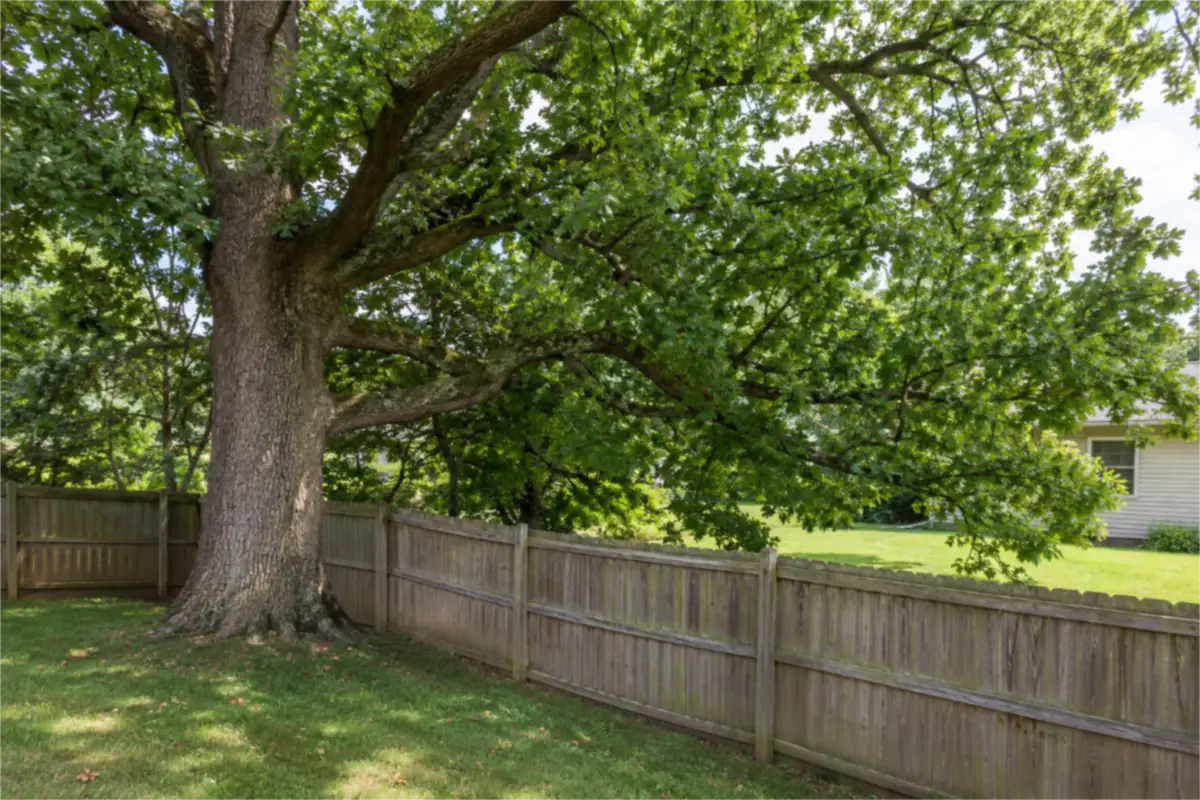
Power lines: when is it the utility's job first?
Ask about lines early, because the answer can change who does the work. OSHA lists "Overhead power lines, falling branches, and faulty safety equipment" among the hazards in tree care.
- A tree touching a line, or a line down: the homeowner calls the utility, or 911 if a line is down, and stays away. We Energies tells its customers: "If a tree is touching a power line, but it is not an emergency, call" the utility. Your team does not book a crew until the utility has dealt with the line.
- Branches over the wire from the pole to the house: the utility may need to step in first. We Energies writes: "We will determine if we need to temporarily remove the service wire so you or your contractor can safely remove branches." Ohio's consumer counsel notes that "For service lines from the poles to buildings, usually only branches that are growing on or through insulated, lower voltage wires are removed."
- Near lines but not touching: your crew's own safety rules and training decide what you take on. Ohio's consumer counsel tells homeowners: "Check with the utility for their requirements for the distance between power lines and branches." It also notes that "utility representatives (or their contractors) may inspect or trim any vegetation to maintain the reliability of the power system and prevent outages."
Power lines
| On the call | What happens first |
|---|---|
| A tree touching a line, or a line down | The homeowner calls the utility, or 911 if a line is down, and stays away |
| Branches over the wire from the pole to the house | The utility may need to step in first |
| Near lines but not touching | Your crew's own safety rules and training decide what you take on |
This guide gives no distances and no line-clearance rules. Those come from the utility, your state and your crew's own safety rules and training.
Which tree leads get a visit now, a dormant-season date or a polite no?
Every lead ends the call with a label and a next step.
Ready: book the estimate visit on the call. The tree fits and they want it done soon. Give two time choices that suit the person who decides. Confirm by text (texts only with consent) or email: the date, who is coming, and gate or pet notes. For a small, simple job, a price range from photos may come first; our tree estimate follow-up guide shows which jobs need the walk-through in "Photo quote or site visit".
Later: give it a date. The job fits, there's just no rush: "after the HOA meets", "after we close on the house", "next winter".
- Put a check-in date in the CRM that matches what they told you.
- A trim that can wait: offer a dormant-season slot. Our tree estimate follow-up guide covers it in "What do you do with a trim that can wait?", and the season planner "When should a tree service run which ads?" on our tree company page shows the months.
- Move the lead to "ready" the day their timing changes.
Not a fit: say no early and kindly. Outside your area, work you don't do (lines you aren't qualified for, crane work you sub out), a renter who can't connect you to the owner, or a neighbor's tree with no owner contact. Say so early and pass on a name if you know one: "We don't do that kind of work, but this company does." Write down why in the CRM.
The neighbor's tree, a live line, a phone price: which tree calls are red flags?
Real red flags:
- Wants a firm price on the phone for a big or risky tree and refuses any visit.
- Asks you to cut the neighbor's tree without the owner knowing.
- Wants a crew now on a tree touching a line. That is the utility first.
- Wants you to promise what insurance will do. Solvea lists "Your insurance will pay for it." and "It is safe to wait." as things an intake team should avoid saying. Your team does not judge coverage or safety on the phone.
- Nobody who can approve the work is reachable.
Not red flags:
- "I'm getting three quotes." Homeowners are told to compare; our tree estimate follow-up guide covers how to write an estimate that holds up next to others.
- "It can wait until winter." A "later" lead: offer a winter slot.
- "Can you give me a range from photos?" For simple jobs, yes.
- "I rent." Ask for the owner.
Every caller gets the same questions, all about the tree and the job. Never about the person.
How do you score a tree call, from the trunk to truck access?
Seven lines, filled in during the call, on paper or as seven CRM fields. One point per "yes". It is our own method, not a score from a vendor. Worked numbers in this guide show the method; they are not real client results.
| Line | Yes = 1 point | Notes |
|---|---|---|
| 1. Job is clear (what and why) | ☐ | Removal / trim / stump / storm / health check |
| 2. In our area, work we do | ☐ | Address; anything we sub out? |
| 3. Owner, or owner reachable | ☐ | Trunk: their yard / neighbor's / on the line |
| 4. No live-line issue, or the utility step is done | ☐ | Touching / near / wire to the house / none |
| 5. Size and access known | ☐ | Photo or form; truck, lift or crane |
| 6. Person who decides at the visit, or reachable | ☐ | Names |
| 7. Wants it done inside our window | ☐ | Now / this season / later (date) |
How to read it:
- 7 points: ready. Book the visit on the call.
- 6 points, missing only line 7: later. Set the check-in date.
- Line 2 or 3 missing: no fit yet. Polite no and a referral, or ask for the owner first.
- Line 4 open: utility first. Score again when the line is dealt with.
- Line 1, 5 or 6 missing: ask one more question, or get the photo, then score again.
An emergency skips the sheet until the danger is handled.
Which lead source brings signed tree jobs, not only more leads?
By lead source, once a month:
- Leads from each source.
- Fit leads: leads with fit-sheet lines 1 to 6 clear.
- Estimate visits held.
- Estimates sent.
- Signed jobs.
- Cost per signed job: what that source cost ÷ the jobs it signed. See our guide to cost per signed job, or the calculator "What does a signed tree job really cost you?" on our tree company page.
Worked numbers in this guide show the method; they are not real client results. Two lead sources, one month:
| Source | Leads | Fit leads | Visits held | Estimates sent | Signed jobs |
|---|---|---|---|---|---|
| Source A | 60 | 21 | 15 | 14 | 4 |
| Source B | 28 | 19 | 16 | 15 | 7 |
Source A sends twice the leads. Source B signs almost twice the jobs. If both cost the same, Source B also has the lower cost per signed job.
Three monthly habits:
- A reason for every "not a fit": outside area, owner not reachable, line work, wanted a phone price.
- Go through the "not a fit" and "later" lists each month. If good trees keep landing under "not a fit", the bar is set too high; "later" leads without a date mean nobody will call them.
- Send fit and signed leads back to Google and Meta as offline conversions, so the ads learn from signed jobs, not form fills. Our tracking service connects it.
What happens after the estimate, and how to track estimate-to-signed by job type, is in our tree estimate follow-up guide under "How do you know your estimate follow-up works?".
How do you qualify without losing emergency calls or winter trims?
Cut the wasted drives, not the homeowners.
- A short form. It does a rough sort; the call fills the gaps.
- Reply first, and ask the questions while you have them on the phone.
- An emergency never waits for the list.
- Ask for a photo instead of five more questions.
- Keep "later" leads. This winter's trims are on that list.
Why should the first voice be someone from your tree company?
People from your company: the owner, the office manager or the arborist. The homeowner is about to let a crew with saws into their yard, so the first voice should be from your company.
The right set-up leaves your team only the talking:
- ads and a form that already ask about the job, the tree and access;
- a fast first reply that goes out even when everyone is up a tree (texts only with consent);
- a CRM field for each fit-sheet line, plus a reminder for each "later" date;
- fit leads, signed jobs and cost per signed job by source, every month.
Digital Hark builds that set-up; see how we work with tree companies. We never call your leads, give estimates, book visits or sell jobs; your team does all of that. The ad accounts, pages and leads all belong to you.
Campaigns our team has run brought one tree-care company 588 leads and a second one 110 leads; each company's own team made the calls, gave the estimates and won the jobs: 58 and 17. Every business is different; we don't promise results.
Once the visit is booked, our tree estimate follow-up guide takes over: the estimate and the days after it.
Common questions
What questions should a tree service ask on the first call?+
What happened, whether the tree is on the house or a line right now, whether they own the home, where the trunk is, the size and truck access if the form didn't say, who decides, when they want it done, whether anything waits on the city, HOA or a neighbor, a photo, and how to reach them. For Texas cities, see our guide to tree removal permits in Texas cities.
Should a tree service give an estimate to a renter?+
Not without the owner, but don't turn the renter away. Get the owner's contact; if the renter agrees, your team reaches out to them. If the owner stays out of reach, the lead becomes "not a fit".
Can you remove a tree that belongs to the neighbor?+
Not without the owner. UGA Extension explains that ownership follows the trunk, and a trunk on the line means joint ownership. Georgia's consumer office adds that the caller may trim branches over their own side, but not by going onto the neighbor's property or damaging the tree. Rules differ by state; this is general information, not legal advice.
What should you do when a tree is touching a power line?+
Tell the homeowner to call the utility, or 911 if a line is down, and to stay away. Utilities such as We Energies ask customers to call them when a tree touches a line. Book your crew only after the utility has dealt with it, under your crew's own safety rules and training.
How should a tree service handle an emergency call differently from a planned job?+
Decide it in the first minute. A tree or big limb on the house, a car or the driveway, a limb hanging over where people walk, or a tree on a wire takes the short emergency path. If anyone is hurt or a line is down, the caller's first call is 911 or the utility, and they stay away. Removals, trims, stumps and health checks get the full call.
Can a tree service qualify a job from photos?+
Photos help. Ask the homeowner to text a photo of the tree, taken from somewhere safe (texts only with consent): it answers size, lean and access in one go and saves questions. For a small, simple job, a price range from photos may come first. A homeowner who wants a firm price on the phone for a big or risky tree and refuses any visit is a red flag.


