
Guide · Roofing
Attic ventilation and insulation for roofing companies: how to market the add-on line
The short answer
Ventilation is the airflow through the attic; insulation is a separate job, and installing it brings you under the FTC's R-value Rule: give a contract or receipt, and name type and thickness with any R-value in an ad. Make no savings claims, check state and city license rules, and find the work on roof inspections you already do.
Key takeaways
- Roof makers treat ventilation as part of the roofing system.
- Vents and insulation meet at the eaves, so one crew can check both.
- Insulation installers fall under the FTC's R-value Rule: give a contract or receipt and make no savings claims. (Not legal advice.)
- Give ventilation and insulation their own ad groups and pages, apart from roof work.
- Offer attic work at the inspection only for a real need, and judge it by signed jobs.
Want us to find your three biggest lead leaks?
Free Growth DiagnosisWhy is a roofing crew already in the attic, where ventilation and insulation meet?
An estimator who checks the decking from inside is already in the attic, and a re-roof touches the ridge and the eaves, where the vents are. Owens Corning says: "Your roofing system needs balanced attic ventilation to perform at its best."
It also says: "If you have blown-in insulation, make sure it doesn't restrict the airflow to the soffit vents." In plain words: vents and insulation are one job in the attic, so the roofer who owns the vents can check both.
One roofing company's page says: "Add new attic insulation to your Grand Rapids home when you replace your roof." One lead vendor puts it: "The truck is already there and the ladder is already up."
If attic checks are on your list of what roofers can advertise in winter, market them as their own line.
Ventilation vs insulation: what is each job, and who may do it?
Ventilation is the airflow through the attic: intake vents low (for example at the soffits) and exhaust vents high (ridge vents, roof vents, attic fans). Owens Corning says: "Every attic ventilation system should have a combination of properly placed intake and exhaust vents." And: "the key concept in proper roof ventilation is balance".
An IIBEC article, written by GAF's codes manager and covering only the 2018 edition of the International Residential Code, says: "Attic ventilation serves two main functions: to lower attic temperatures and to remove excess moisture." That code has a roof ventilation section (R806). We do not give vent ratios here; your local code, its edition and the shingle maker's instructions do. Check your shingle maker's warranty terms for ventilation too.
Insulation is a separate job, and installing it brings you under the FTC's R-value Rule: "You are covered by this part if you are a member of the home insulation industry." and "It includes manufacturers, distributors, franchisors, installers, retailers, utility companies, and trade associations."
Who may do the work differs by state and city (not legal advice):
- Texas: the Texas Department of Licensing and Regulation (TDLR) list of licensed trades shows no insulation or roofing license; cities may still ask for registration or permits.
- North Carolina: the general contractor license depends on the project's value; check the board's threshold.
- Florida, Georgia, Missouri and everywhere else: check your state licensing board and your city or county.
Wiring a powered attic fan is electrical work; in Texas, the TDLR list includes electricians as a licensed trade.
Own crew or referral is a business choice; this guide does not say which one pays better. If you refer the work, skip the ads below but keep the inspection habits.
In Google Ads, which attic searches get their own ad group, and which stay with roof repair?
Google says: "Use ad groups to organize your ads by a common theme, such as the types of products or services you want to advertise." Our advice: give ventilation and insulation each their own ad group, apart from roof work, and their own campaign only for their own budget or service area.
Keyword themes might look like this; check the volume in your own account first:
- Ventilation: ridge vent installation, soffit vent installation, attic fan installation, attic ventilation.
- Insulation: attic insulation, blown-in insulation, insulation removal.
- Roof repair keeps "roof vent leak" and similar searches; a leak is a repair job first (our view).
Negatives between the lines (our view; adjust to your account):
| In this ad group | Add these as negatives |
|---|---|
| Roof repair / roof replacement | insulation |
| Attic ventilation | leak, leaks, leaking, insulation |
| Attic insulation | roof, roofing, shingle, shingles, leak, leaks |
| Everywhere, if you don't do the work | spray foam, HVAC |
For the method, see the cross-negatives section of our negative keywords guide and its "where" section; the roof, siding and gutter pairs are in our siding and gutter guide for roofers.
One landing page per line, with your own photos and a form; our landing pages service builds them, with what is included confirmed in writing in your proposal.
What may an attic insulation ad say?
Short version (not legal or tax advice): name the work and make no savings claims.
- Savings claims: the R-value Rule says "you must have a reasonable basis for the claim." The simplest choice is to make none.
- If an ad names an R-value, the rule says: "If your ad gives an R-value, you must give the type of insulation and the thickness needed to get that R-value." Plus this statement: "The higher the R-value, the greater the insulating power. Ask your seller for the fact sheet on R-values." This is the rule, not advice to put R-values in your ads.
- Installers give a contract or receipt: "If you are an installer, you must give your customers a contract or receipt for the insulation you install."
- Tax credit: the federal credit that used to cover attic insulation ended for work placed in service after December 31, 2025. Remove old lines that still promise it; our window replacement marketing guide covers tax-credit wording. (Not tax advice.)
- "Free" checks must really be free, and quotes about lower bills count as a claim; see our guides to free roof inspection ad rules and customer endorsements in contractor ads.
Which states can list attic insulation in Local Services Ads, and what goes on your Business Profile?
Local Services Ads. Google's US category list has "Roofers" and "Home insulation (California and Florida only)". We found no ventilation category. Check what your own account offers; adding an industry asks for its own verification (see our Local Services Ads guide on how verification works).
Business Profile. List attic services only if you really do that work; our Business Profile guide for roofers covers which categories to pick.
At the roof inspection, what does the crew need to see in the attic before offering attic work?
Found at the inspection, attic work is a fair add-on only when the crew sees a real need.
Six habits:
- Ask for attic access when you book; see what the homeowner should have ready in our guide to qualifying roofing leads.
- Photograph what the crew really sees, such as insulation blocking a soffit vent.
- Put it in the inspection report as its own line; see our guide to roof inspection photo reports.
- Put it in the estimate as its own item, never as a condition of the roof job: a no to the attic leaves the roof price and date the same.
- No scare words. Say what you saw; never tell a homeowner their house is at risk to win an attic job.
- If the attic is fine, say so. That is part of why they trust your roof estimate.
The rest of inspection day is in our guide to roofing estimate follow-up. Follow up by text only with people who agreed to texts (texts only with consent).
A no-pressure note to past customers can fit (see our guide to emailing past customers), and on Facebook a ventilation check can be a second offer for homeowners not ready for a new roof (see the offers section of our Facebook ads guide for roofers).
How do you photograph attic work that is hard to see once it is done?
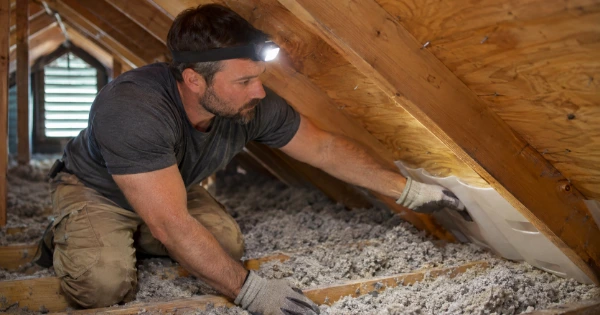
Attic work is hard to see once it is done. One web agency says: "Insulation sells an invisible product, so you market the result". Show the work itself: before and after shots, vents, baffles keeping insulation clear, even insulation depth, and the crew on a real job.
Use your own photos, not stock images shown as your work. Get the homeowner's permission before using a photo in an ad, and keep house numbers, street signs and anything showing the address out of the frame; our guide to customer endorsements in contractor ads covers photo permission.
How do you count signed ventilation, insulation and inspection add-on jobs apart from roof jobs?
Judge attic work apart from your roof numbers:
- One lead source per line: tag CRM leads and Google Ads conversions "attic – ventilation" and "attic – insulation".
- Tag inspection add-ons separately, so attic ads do not get credit for work they did not bring.
- Work out cost per signed job per line from your own spend, with the method in our cost per signed job guide. Our Google Ads guide for roofers covers how to track signed jobs from your ads.
- Keep or cut by signed jobs, not leads or clicks; a slow month is not a verdict.
Worked numbers in this guide show the method; they are not real client results. The table uses our own inputs; it is illustrative only, not real results.
| One season, by lead source | Leads | Estimates given | Signed jobs |
|---|---|---|---|
| Attic – ventilation ads | 14 | 8 | 3 |
| Attic – insulation ads | 18 | 9 | 1 |
| Inspection add-on | — | 10 | 5 |
Here the insulation ads brought the most leads but one signed job, and the inspection add-on brought five with no extra ad spend; our siding and gutter guide for roofers uses the same split for other add-on lines.
Where Digital Hark fits
For a roofer's attic line, Digital Hark can help keep searches apart, give each line its own page, check your ad wording against the rules in this guide, and show signed jobs by line. We do not inspect attics or roofs, and we do not install or sell anything; we never call, text or book for you; your team does that. What is included is confirmed in writing in your proposal.
Before you sell attic work: a license, R-value and inspection checklist
- ☐ State board and city or county checked for insulation work.
- ☐ Own ad group, page and negatives per line; "roof vent leak" stays with roof repair.
- ☐ No savings claims or old tax-credit lines; R-value ads give type and thickness; a contract or receipt for every insulation job.
- ☐ Attic work is its own report and estimate line, never a condition of the roof job.
- ☐ Own lead source and cost per signed job for each attic line and the inspection add-on.
Common questions
Who may wire a powered attic fan?+
Wiring a powered attic fan is electrical work. In Texas, the TDLR list of licensed trades includes electricians; in other states, check your state licensing board and your city or county. This is not legal advice.
Do you need a license to install attic insulation?+
It depends on your state and city; Texas's licensing agency lists no insulation or roofing license, but cities may ask for registration or permits. Check your state board and your city or county first. This is not legal advice.
Should attic work have its own Google Ads ad group?+
Yes: give ventilation and insulation each their own ad group, page and negatives, apart from roof work. Use a separate campaign only for a separate budget or service area.
What can an attic insulation ad say?+
Name the work, show your own photos and make no savings claims; an R-value in an ad needs the insulation type and thickness. Installers must also give a contract or receipt. This is not legal advice.
What must an attic insulation ad add if it gives an R-value?+
The type of insulation and the thickness needed to get that R-value, plus this statement from the FTC's R-value Rule: "The higher the R-value, the greater the insulating power. Ask your seller for the fact sheet on R-values." That is the rule, not advice to put R-values in your ads. This is not legal advice.
How do you know if the attic line pays off?+
Give ventilation, insulation and the inspection add-on their own lead sources and cost per signed job. Keep or cut the line by signed jobs, not leads or clicks.


